
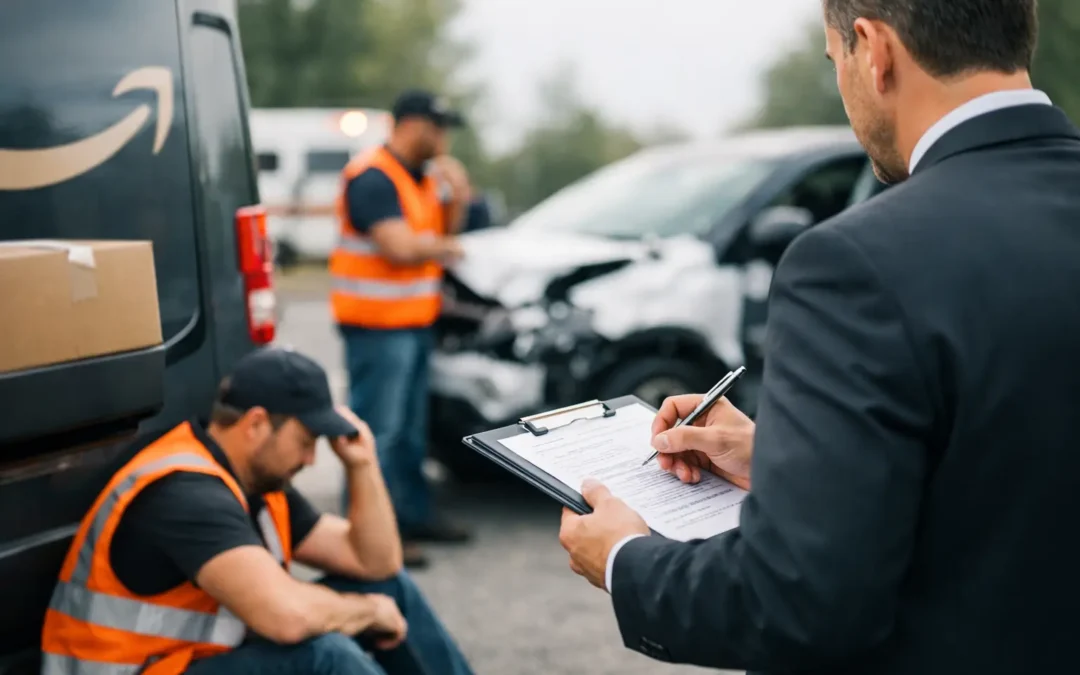
A delivery driver hits your car while rushing to finish a block. Or an Amazon Flex driver is injured by someone else on a crowded Los Angeles street. The immediate questions sound simple: Who pays for the damage? Which insurance policy applies? In reality, these cases can involve several insurers and competing stories about what the driver was doing at the moment of impact. An Amazon Flex accident liability lawyer can investigate those questions before an insurance company uses uncertainty to reduce or deny a valid claim.
For injured people and families, the priority is not learning insurance jargon while dealing with pain, appointments, missed work, and a damaged vehicle. It is protecting the evidence, getting appropriate medical care, and pursuing the compensation available under California law.
Why Amazon Flex crashes create liability disputes
Amazon Flex drivers generally use their own vehicles to make deliveries as independent contractors. That arrangement does not automatically mean Amazon has no responsibility, and it does not automatically make Amazon responsible for every collision. Liability depends on the facts, the applicable insurance policies, and the relationship between the driver’s work activity and the crash.
A driver may have been actively delivering packages, traveling to a pickup location, waiting for a route to begin, or driving home after completing deliveries. Those distinctions matter because available coverage can change depending on whether the driver was using the Amazon Flex app and performing delivery-related work at the time of the collision.
The driver’s personal auto insurer may also become involved. Some personal policies limit or exclude coverage when a vehicle is being used for delivery work. Then there may be a dispute over whether the driver was covered personally, through delivery-related coverage, or through another policy. None of that should become an excuse to leave an injured person without answers.
Who may be responsible after an Amazon Flex accident?
Every case must be evaluated on its own evidence. A collision may involve fault by the Flex driver, another motorist, a vehicle owner, a business, or more than one party. For example, a driver who was speeding, following too closely, looking at a phone, making an unsafe turn, or running a red light may be liable for the harm caused.
In some cases, the delivery driver is not the person who caused the crash. A distracted driver may strike a Flex vehicle, injuring the delivery driver or a passenger. A pedestrian may be hit while a driver reverses or turns into a driveway. A motorcyclist may be forced down by a driver making a rushed lane change. The legal focus is on negligent conduct, not assumptions about who should be blamed because an Amazon package was in the vehicle.
California also follows comparative negligence rules. That means an insurer may argue that an injured person shares some responsibility for an accident. Even when that argument is weak, it can be used to pressure someone into accepting less than their claim may be worth. A careful investigation is often the strongest response.
The timing of the delivery can matter
One of the first questions in an Amazon Flex claim is whether the driver was engaged in delivery activity at the time of the collision. App records, route information, package scans, timestamps, navigation data, and communications can help establish the answer.
The difference between heading to a station, carrying packages on an active route, and driving after a block ends may affect which insurance coverage applies. Do not rely on a verbal assurance from an adjuster that there is no available coverage. The policy language and records should be reviewed closely.
More than one insurance policy may apply
A serious crash can exceed the limits of one policy, particularly when there are surgeries, extended rehabilitation, permanent symptoms, significant wage loss, or a wrongful death. Potential sources of recovery may include the at-fault driver’s policy, delivery-related coverage, another vehicle owner’s policy, and uninsured or underinsured motorist coverage.
The existence of coverage is not the same as a guaranteed payment. Insurers will examine fault, policy terms, exclusions, damages, and whether the claimant followed necessary procedures. That is why early legal guidance can make a meaningful difference.
What an Amazon Flex accident liability lawyer investigates
A strong claim is built on evidence gathered before it disappears. Police reports are useful, but they are not always complete or accurate. Witnesses move, video is erased, vehicles are repaired, and electronic records can become harder to obtain with time.
An Amazon Flex accident liability lawyer may investigate the crash scene, vehicle damage, photographs, nearby surveillance footage, witness accounts, phone records where appropriate, and available delivery activity records. The goal is to establish how the collision happened, who was at fault, and what coverage may be available.
Your attorney should also document the full effect of the injury. That can include emergency care, follow-up treatment, physical therapy, diagnostic imaging, medication, future medical needs, lost earnings, reduced ability to work, and the daily pain and disruption the injury has caused. Property damage deserves attention too, but a quick vehicle settlement should not distract from a potentially larger bodily injury claim.
Steps to take after a California delivery crash
If you are able, call 911 and request medical help after a collision. Some injuries, including concussions, internal injuries, and soft-tissue damage, may not feel severe at the scene. Prompt medical evaluation protects your health and creates important documentation.
Exchange information, photograph the vehicles, roadway, debris, visible injuries, license plates, and any delivery markings or packages that can be safely photographed. Get witness names and contact information. If the other driver identifies themselves as an Amazon Flex driver, write down what they say, but avoid arguing about fault at the scene.
Report the collision to your insurer, but be careful with recorded statements to another insurer before you understand the facts. An adjuster may sound helpful while asking questions designed to limit the claim. Do not guess about speed, injuries, or fault. Do not sign a release or accept a settlement simply because bills are arriving.
Keep copies of medical records, receipts, repair estimates, employment documentation, and any communication about the crash. A simple written journal can also help show how pain, sleep problems, mobility limits, and missed activities affect your daily life.
When should you speak with a lawyer?
It is wise to speak with an attorney as soon as possible if you suffered more than minor injuries, a loved one was seriously hurt or killed, fault is disputed, the driver was working for Amazon Flex, or an insurer says coverage is unavailable. It is also worth getting help if you are a Flex driver injured by another person’s negligence. Delivery drivers have rights too.
California generally imposes deadlines for personal injury claims, and waiting can damage a case even before a formal deadline arrives. Important evidence can be lost, and insurance companies begin building their position immediately. A free consultation can clarify the next step without placing the legal burden on an injured family.
LionsGate Law Group approaches these cases with the attention they deserve: listening to what happened, identifying the available insurance coverage, coordinating the legal process around your recovery, and preparing to fight when an insurer refuses to be fair.
You do not have to solve a complicated Amazon Flex liability dispute from a hospital room, a repair shop, or your kitchen table. Get clear answers early, protect your claim, and give yourself room to focus on healing.