
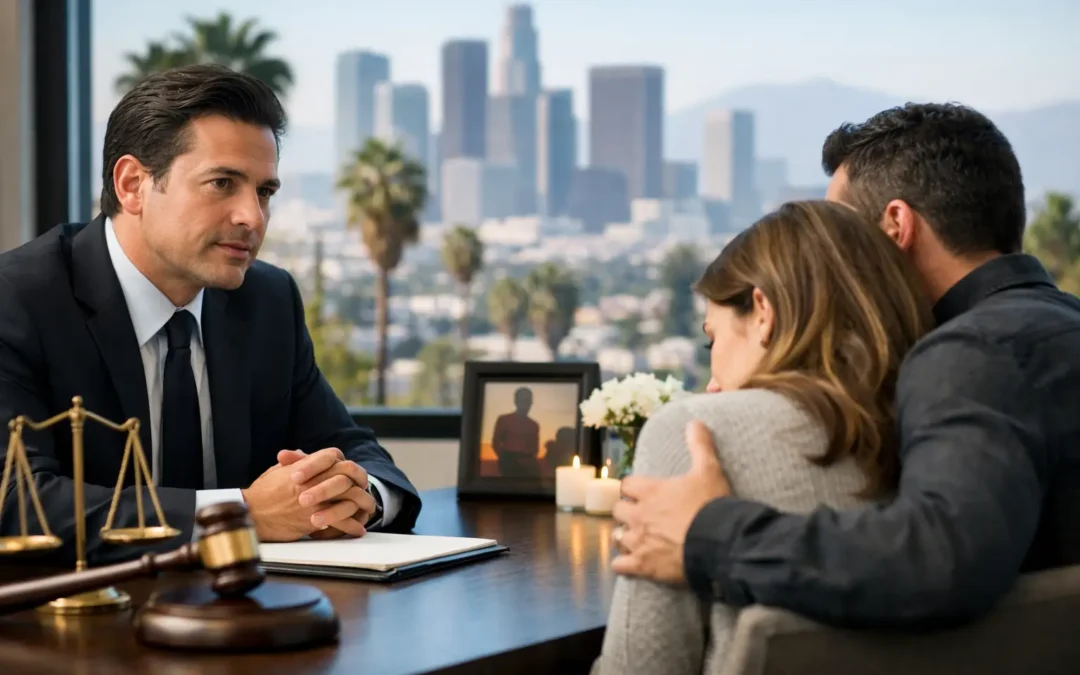
The call usually comes without warning: a crash on the 405, a fall at an apartment complex, a workplace incident, or a violent act that should never have happened. While your family is trying to process an unimaginable loss, an insurance company may already be looking for ways to limit what it pays. A wrongful death lawyer Los Angeles families can rely on helps protect your rights, preserve the truth, and take the legal pressure off your shoulders.
No legal claim can replace the person you lost. It can, however, hold the responsible party accountable and seek the financial support your family needs to move forward. The right legal team should treat your loss with respect while being fully prepared to fight when an insurer, corporation, property owner, or negligent driver refuses to do the right thing.
What a Wrongful Death Claim Means in California
A wrongful death claim may arise when someone dies because another person or company acted carelessly, recklessly, or intentionally. Many cases begin with a preventable event: a distracted driver runs a red light, a trucking company ignores safety rules, a landlord fails to correct a dangerous condition, or a business allows unsafe conduct on its property.
The legal question is not simply whether an accident occurred. It is whether someone had a duty to act safely, failed in that duty, and caused a death as a result. In Los Angeles, that often requires a careful investigation because responsibility may be shared among several parties. A serious collision, for example, can involve a driver, an employer, a vehicle owner, a rideshare company, a delivery contractor, or another business with insurance coverage.
Wrongful death cases are civil claims, not criminal cases. A criminal investigation may be happening at the same time, but your family’s ability to seek compensation does not necessarily depend on a criminal conviction. The standards, procedures, and goals are different.
Who Can Bring a Wrongful Death Claim?
California law limits who may bring a wrongful death action. The people most commonly entitled to file are a surviving spouse, registered domestic partner, and children. If there are no surviving people in those categories, other relatives may have rights depending on the family circumstances and California inheritance law.
Certain financially dependent people may also have a claim in specific situations, including a putative spouse, stepchildren, or parents. These questions can become complicated in blended families, households where people depended on the deceased for support, and cases involving unmarried partners.
That is one reason families should not accept an insurance adjuster’s statement about who is or is not eligible. A proper case evaluation looks at the full family picture, not just the information an insurer chooses to recognize.
Evidence Can Disappear Quickly After a Fatal Accident
In the days after a death, collecting evidence may be the last thing on your mind. Unfortunately, it is often when crucial proof is most vulnerable. Surveillance video can be recorded over, damaged vehicles can be repaired or destroyed, witnesses can become harder to locate, and company records may not be preserved unless action is taken quickly.
A wrongful death lawyer in Los Angeles can move early to identify and preserve evidence such as:
- Police reports, 911 calls, body-camera footage, and accident-scene photos
- Vehicle data, dash-camera recordings, and traffic or business surveillance footage
- Driver logs, maintenance records, hiring files, and company safety policies
- Witness statements, medical records, and expert analysis of how the event occurred
Early investigation is especially valuable in truck, rideshare, delivery, construction, premises liability, and fire cases. These matters can involve defendants with their own investigators and legal teams working to protect their interests from the beginning.
Your family should not have to compete with those resources alone. A strong legal team can send preservation notices, coordinate with qualified experts when needed, and build the claim around evidence rather than assumptions.
Compensation Is About the Family’s Real Loss
Insurance companies often reduce a wrongful death case to bills, pay stubs, and formulas. Your loss is larger than that. California wrongful death damages may include the financial support your loved one would have provided, the value of household services, loss of gifts or benefits, funeral and burial expenses in appropriate circumstances, and the loss of love, companionship, care, comfort, guidance, and affection.
For a surviving child, the loss of a parent’s guidance may shape every stage of life. For a spouse or domestic partner, the loss may include not only income but the daily partnership that made a home and family possible. These losses are deeply personal, and they deserve to be presented with care.
The value of a claim depends on the facts. Age, health, earning history, family relationships, insurance coverage, liability evidence, and the conduct of the responsible party can all matter. A lawyer who promises a specific recovery before investigating the case is not giving your family an honest assessment. What you should expect is a clear explanation of the available claims and a determined effort to pursue the full compensation the evidence supports.
Do Not Let the Insurance Company Set the Terms
After a fatal accident, an insurer may sound sympathetic while still asking questions designed to protect its bottom line. It may request a recorded statement, seek broad medical or financial authorizations, or make an early settlement offer before your family understands the full scope of the loss.
You are not required to make major decisions in the middle of grief. Before signing a release or accepting a payment, speak with counsel. Once a settlement is finalized, it generally ends the right to seek additional compensation from that party, even if new information later reveals that the loss was greater than expected.
California also has filing deadlines for wrongful death claims. In many cases, the deadline is two years from the date of death, but exceptions and shorter deadlines may apply, particularly when a government entity could be responsible. Waiting can put a valid claim at risk and make proof more difficult to obtain.
What Your Attorney Should Handle for You
A wrongful death case requires legal skill, but it also requires compassion and communication. Your attorney should explain what is happening in plain language, return your calls, and keep your family informed without forcing you to relive the loss unnecessarily.
The legal work may include investigating fault, identifying every responsible party, calculating damages, managing insurance communications, negotiating from a position of strength, and filing a lawsuit when a fair resolution is not offered. Some cases settle through negotiation. Others require litigation because the defense refuses to accept responsibility or minimizes the harm it caused. The approach should fit the facts, not the insurer’s preferred timeline.
At LionsGate Law Group, APC, families are not expected to carry this burden alone. Our team is willing to fight for accountability while providing the personal attention grieving families need during a difficult time.
Choosing a Wrongful Death Lawyer in Los Angeles
Look for a lawyer who has experience handling serious injury and fatal accident claims, not someone who treats your case like a file number. Ask how the firm investigates cases, who will communicate with you, whether the attorney is prepared to litigate, and how fees and costs work. A free consultation should give you useful answers, not pressure.
It also helps to choose a firm that understands Los Angeles. Cases here may involve crowded roadways, large commercial carriers, apartment and retail properties, complex employer relationships, and powerful insurance companies. Local knowledge is valuable, but commitment is essential. Your family deserves an advocate prepared to stand firm when the other side tries to shift blame or offer less than the case deserves.
If someone else’s negligence took your loved one’s life, you do not need to have every answer before asking for help. Preserve what you can, avoid signing away your rights, and give your family the chance to be heard with dignity and strength.