
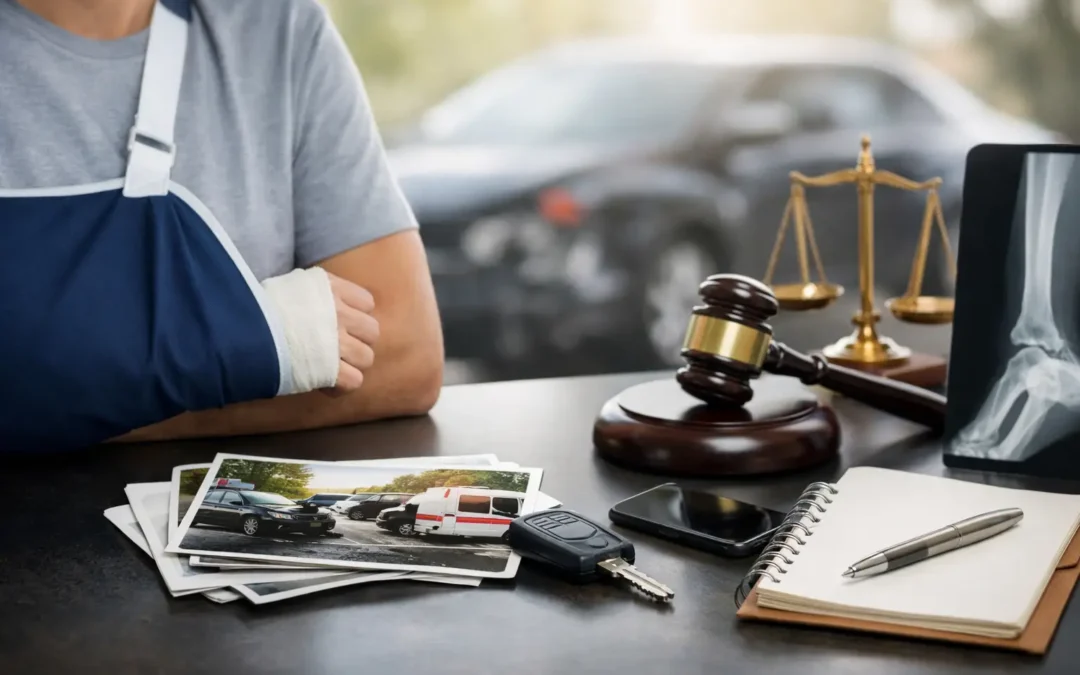
After a crash, fall, dog bite, or other traumatic event, evidence can disappear before the pain does. The best evidence for injury claims is often created or preserved in the first hours and days, when injured people are focused on getting medical care, repairing a vehicle, and trying to make sense of what happened. That is understandable. It is also why insurance companies often move quickly to shape the story before the full impact of an injury is clear.
A strong claim is not built on one dramatic photograph or one witness statement. It is built on records that work together: proof of how the incident happened, proof of the injuries it caused, and proof of the financial and personal losses that followed. The goal is to make the facts difficult to dismiss.
Best Evidence for Injury Claims: Start With the Scene
The evidence closest in time to an accident can carry real weight because it captures conditions before they change. In a car, truck, motorcycle, pedestrian, or rideshare collision, photographs and video can show vehicle positions, traffic signals, skid marks, debris, visible damage, weather, and roadway hazards. In a slip-and-fall or trip-and-fall case, they may show a spill, broken flooring, poor lighting, an uneven walkway, or missing warning signs.
If you can safely do so, take more photos than you think you need. Photograph the wider scene first, then take closer images of the hazard, vehicle damage, and visible injuries. A short video can provide useful context that a single still image misses. Do not put yourself in danger to collect proof. Your health and safety come first.
A police report can also be valuable, particularly after a traffic collision. It may identify involved parties, document initial statements, note citations, and record the officer’s observations. But a report is not the final word on fault. Officers can arrive after the most important moments have passed, and reports can contain mistakes. If something is incorrect, tell your attorney and preserve evidence that shows what actually occurred.
For injuries on private property, report the incident to the property owner, manager, employer, or store as soon as practical. Ask that an incident report be created, but do not assume the report will fully protect you. Request a copy if available, write down who you spoke with, and take your own photographs. Businesses may repair a dangerous condition quickly, which makes early documentation especially important.
Medical Records Connect the Incident to Your Injury
Medical evidence is usually at the center of a California injury claim. Emergency-room records, urgent-care notes, imaging, primary-care visits, specialist evaluations, physical therapy records, prescriptions, and treatment plans can establish more than a diagnosis. They create a timeline showing when symptoms began, how they progressed, and what care you needed.
Seek appropriate medical attention promptly after an accident. Some serious injuries, including concussions, soft-tissue damage, internal injuries, and spinal conditions, may not feel severe immediately. Delaying care can affect your health and give an insurer an opening to argue that an injury was unrelated, minor, or caused by something else.
Be accurate with your providers. Explain how the injury occurred, describe every symptom, and mention whether pain is affecting sleep, mobility, work, driving, childcare, or daily tasks. Do not exaggerate, but do not minimize your condition out of habit. Medical records are strongest when they are truthful, detailed, and consistent.
There is a trade-off here. Not every ache requires an emergency-room visit, and unnecessary treatment can raise questions. But ignoring symptoms or stopping treatment without medical guidance can also damage a claim. Follow your provider’s recommendations and discuss barriers to care, such as transportation, work demands, or insurance issues, so they are documented.
Keep Records of What Treatment Costs You
Save every medical bill, explanation of benefits, pharmacy receipt, mileage record, and invoice for medical equipment or home assistance. Out-of-pocket costs can add up quickly, even when health insurance pays part of the bill. These documents help show the real financial consequences of an injury.
If future treatment may be necessary, the opinions of qualified treating doctors and specialists matter. Future medical damages are not based on guesswork. They should be supported by medical evidence explaining the expected care, cost, and reason it is connected to the incident.
Witnesses, Video, and Digital Evidence Can Settle Fault Disputes
Independent witnesses can be especially persuasive because they generally have no personal stake in the outcome. Get names, phone numbers, email addresses, and a brief note about what each person saw. Memories fade, and people change phone numbers. A witness who seems easy to reach today may be difficult to locate a few months from now.
Video is often decisive, but it may be overwritten quickly. Nearby businesses, apartment buildings, homes, parking facilities, buses, and traffic cameras may have footage. In a premises-liability claim, the property owner may have surveillance video that shows the dangerous condition, how long it existed, or what employees did after the incident. An attorney can send preservation requests to help prevent key evidence from being destroyed.
Digital records may also matter in ways people do not expect. A rideshare trip record can identify the driver and route. Delivery-app information may help establish whether a driver was working at the time of a collision. Vehicle event data, phone records, text messages, and social-media posts can become relevant depending on the dispute. These materials can help a claim, but they can also be used against an injured person if they are misunderstood or inconsistent with alleged limitations.
Do not delete messages, photos, or posts connected to the incident. Avoid posting details, videos, or comments about your injuries while the claim is pending. A single smiling photo from a family gathering does not prove someone is uninjured, but insurers may try to use it that way.
Employment and Income Records Show What Was Lost
A serious injury affects more than medical appointments. It can mean missed shifts, reduced hours, lost commissions, canceled contracts, and difficulty returning to physical work. Pay stubs, tax returns, W-2s, 1099s, work schedules, employer letters, and disability documentation can help prove lost income.
For self-employed people, freelancers, and gig workers, evidence may include invoices, client communications, business bank statements, canceled jobs, app earnings histories, and prior-year tax returns. The proof needed depends on how you earn a living. A clear before-and-after picture is often more convincing than a broad estimate of lost wages.
In catastrophic-injury cases, reduced earning capacity may be as important as immediate missed income. This requires careful analysis of the person’s occupation, work history, medical restrictions, education, and expected career path. It should be evaluated early, not after critical records have gone missing.
Your Own Notes Can Make the Evidence More Human
Medical charts may record pain levels and diagnoses, but they rarely capture the full disruption of an injury. A simple journal can document pain flare-ups, headaches, sleeplessness, missed events, mobility limits, medication side effects, and help needed from family members. It can also note how the injury interferes with work, parenting, hobbies, and basic household tasks.
Write factually and consistently. A few honest entries each week are more useful than trying to reconstruct months of daily life from memory. This record can help you remember details when speaking with your legal team and may support the non-economic losses that do not come with a receipt.
What Can Weaken an Otherwise Strong Claim
Insurance carriers look for gaps. They may argue that a claimant had a preexisting condition, waited too long to seek treatment, failed to follow medical advice, or gave inconsistent accounts of the incident. Preexisting injuries do not automatically prevent recovery. The question is whether someone else’s negligence caused a new injury or worsened an existing condition. Prior medical records may become important in answering that question fairly.
Be careful when giving a recorded statement to an insurer, particularly the other party’s insurer. Early questions can seem routine, but the answers may later be used to minimize fault or damages. You do not need to accept a fast settlement just because bills are arriving. Once a settlement is signed, it commonly ends the right to seek additional compensation for injuries that later prove more serious.
California also has deadlines for injury claims, and claims involving government entities can involve much shorter notice requirements. The right next step depends on the facts, the parties involved, and the type of case. Getting legal guidance early can help protect evidence as well as legal options.
At LionsGate Law Group, APC, we understand that an evidence file is not just paperwork. It is the record of what happened to you and what you need to rebuild. Preserve what you can, focus on your treatment, and ask for help before an insurance company gets to define your story for you.