
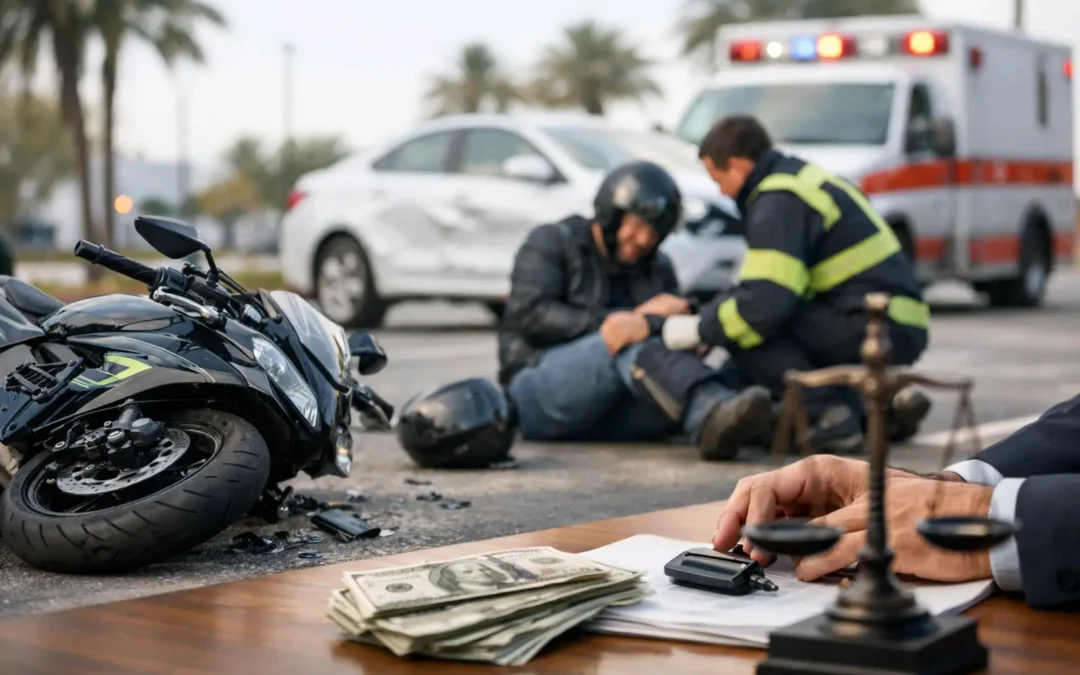
A motorcycle crash can turn an ordinary ride through Los Angeles or the San Fernando Valley into months or years of medical appointments, missed work, pain, and insurance pressure. Motorcycle accident compensation California claims are meant to address those losses, but getting a fair result often takes more than submitting bills and waiting for an insurer to respond.
Motorcyclists are frequently blamed before the facts are fully examined. An insurance adjuster may suggest that speeding, lane splitting, or the fact that someone was riding a motorcycle caused the collision. Those assumptions are not evidence. When another driver, business, government entity, or other party acted carelessly, an injured rider has the right to pursue compensation for the harm that negligence caused.
What Motorcycle Accident Compensation in California May Cover
The value of a claim depends on the injuries, available insurance coverage, fault evidence, and the real effect the crash has had on a rider’s life. There is no honest one-size-fits-all settlement figure. A broken wrist that heals fully will be evaluated differently than a traumatic brain injury, spinal damage, amputation, severe road rash, or injuries requiring multiple surgeries.
Compensation can include the medical care already received and the treatment reasonably expected in the future. This may include ambulance transportation, emergency care, surgery, hospitalization, diagnostic testing, medication, physical therapy, rehabilitation, assistive devices, and care from specialists. Future treatment matters because a quick settlement may not account for complications, repeat procedures, or long-term limitations that become clearer over time.
A claim may also include lost income. That can mean wages missed while recovering, but it may also involve lost earning capacity when injuries prevent a person from returning to the same physical work, schedule, or career. For riders who are self-employed, work overtime, receive commissions, or perform gig and delivery work, documenting income losses requires careful attention.
California law also allows injured people to seek non-economic damages, commonly described as pain and suffering. These damages recognize the physical pain, emotional distress, sleep disruption, scarring, loss of enjoyment of life, and limitations caused by an injury. A person who can no longer ride, exercise, care for children without help, or participate in family activities has suffered losses that do not appear on a medical invoice.
Property damage is another part of the picture. A motorcycle claim can include the cost to repair or replace the bike, riding gear, helmet, phone, and other damaged property. Do not assume that accepting a property-damage payment resolves the bodily-injury claim. They are usually separate parts of the case, and signing any release should be approached carefully.
When a collision is fatal, surviving family members may have a wrongful death claim. Depending on the circumstances, compensation may address lost financial support, funeral expenses, and the profound loss of a loved one’s companionship and guidance.
Proving Who Caused the Crash
Many motorcycle collisions happen because another motorist failed to look for a rider. Left-turn crashes, unsafe lane changes, rear-end impacts, doors opened into traffic, distracted driving, tailgating, and drivers entering a roadway without yielding are common examples. Truck drivers, rideshare drivers, delivery drivers, employers, vehicle manufacturers, and property owners can also bear responsibility in the right case.
The strongest cases are built on evidence, not assumptions. Police reports can help, but they are not the final word on fault. Video footage, witness statements, photographs, vehicle damage, scene measurements, helmet-camera footage, electronic data, phone records, and expert analysis may reveal what actually occurred.
This evidence can disappear quickly. Nearby business surveillance systems may overwrite video within days. A damaged motorcycle may be repaired or sold. Witnesses’ memories fade. Taking photos, saving damaged gear, obtaining contact information from witnesses, and preserving every insurance letter can make a meaningful difference.
Lane Splitting Does Not Automatically Defeat a Claim
California is the only state that expressly permits lane splitting, but that does not mean every lane-splitting collision is simple. The safety of the maneuver depends on traffic speed, the rider’s speed, lane conditions, visibility, and the conduct of surrounding drivers.
An insurer may point to lane splitting as a reason to deny responsibility. That argument may fail when a driver changed lanes without signaling, failed to check mirrors, or moved into a rider’s path. The facts matter. A rider can also still recover compensation even if they share some responsibility for the crash.
California’s Comparative Negligence Rule
California follows a pure comparative negligence system. In practical terms, an injured motorcyclist’s recovery can be reduced by their percentage of fault, but being partly at fault does not automatically bar a claim.
For example, if total damages are $200,000 and the rider is found 20% responsible, the recovery could be reduced by $40,000. Insurance companies know this rule and often use it to push more blame onto riders than the evidence supports. A strong response requires a clear account of the crash and a full presentation of the injuries and losses.
Helmet use may also become an issue. California requires motorcycle riders and passengers to wear helmets. Failure to wear one does not give another driver permission to cause a crash, but it may affect disputes about head injuries and the extent of damages. Again, the specific medical and accident evidence controls.
Deadlines Can Change Your Options
Most California personal injury lawsuits must be filed within two years of the injury. Property-damage claims generally have a longer deadline, but waiting is still risky. There are exceptions, and the timeline may be different when a government agency or public employee may be responsible.
Claims involving a city, county, state agency, public roadway, or government vehicle often require a formal government claim within six months. Missing that deadline can jeopardize an otherwise valid case. A dangerous road condition, failed traffic signal, or collision with a public vehicle deserves prompt legal review.
Do not rely on an insurance adjuster’s deadline as though it were the legal deadline. An insurer’s request for documents, recorded statements, or a quick settlement offer may serve its interests, not yours.
Steps That Protect a Motorcycle Injury Claim
Your health comes first. Seek medical evaluation promptly, follow treatment recommendations, and be candid with providers about every symptom. Gaps in care can give an insurer room to argue that the injuries were not serious or were caused by something else.
Avoid posting crash details, medical updates, or activity photos on social media while a claim is pending. Even an innocent photo can be taken out of context. It is also wise to avoid giving a recorded statement to the other driver’s insurer before understanding the purpose of the questions and the facts at issue.
Keep a simple file with medical bills, discharge papers, prescriptions, mileage to appointments, wage information, repair estimates, photos, and communications from insurers. A short daily note about pain levels, missed events, and physical limitations can also help show how the injuries affect real life beyond the examination room.
Why Early Legal Help Matters
A serious motorcycle claim may involve multiple insurance policies, uninsured or underinsured motorist coverage, disputed fault, and high-value future medical needs. Insurers are businesses. Their goal is often to resolve claims for as little as possible, especially before an injured person understands the full cost of recovery.
A personal injury attorney can investigate the crash, preserve evidence, identify all potentially responsible parties, coordinate with medical providers, calculate losses, negotiate with insurers, and take the case to court when a fair resolution is not offered. At LionsGate Law Group, APC, the focus is on taking the legal burden off injured clients while fighting for the compensation they and their families need.
No rider should have to accept blame because of stereotypes about motorcycles or settle before they know what recovery will require. If a crash has left you injured, overwhelmed, or uncertain about the insurance process, a free consultation can give you a clearer path forward and protect your right to be heard.