
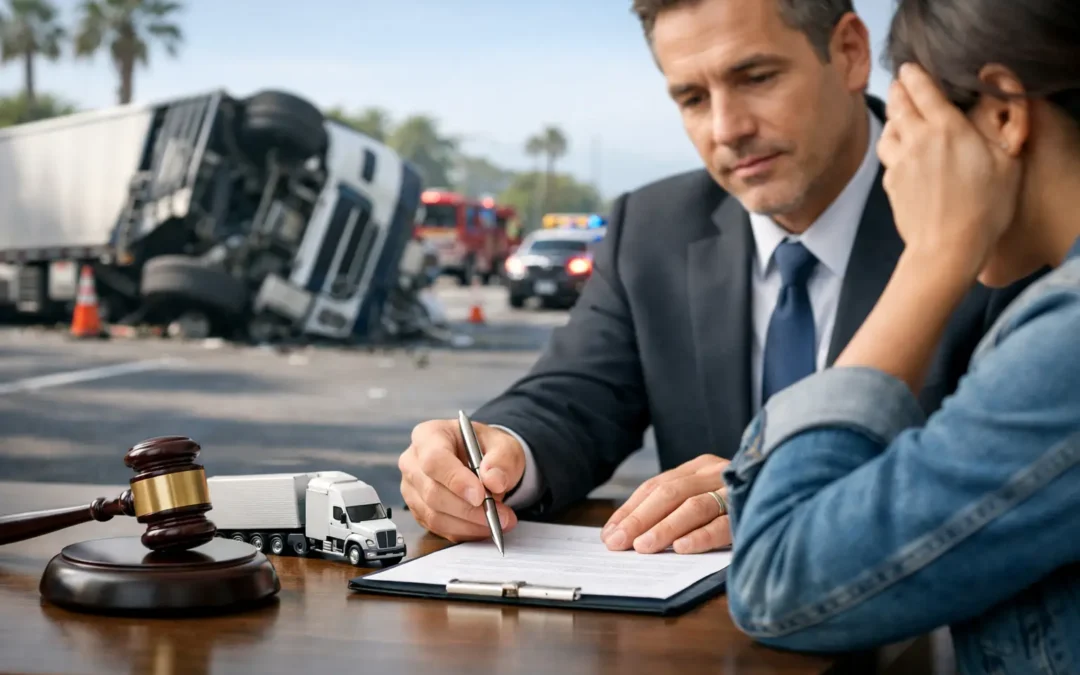
A collision with a commercial truck can change the course of a family’s life in seconds. The vehicle may be totaled, medical care may begin immediately, and an insurance adjuster may call before you have processed what happened. When you need a truck accident lawyer California families can turn to, the goal is not simply to file paperwork. It is to protect the evidence, identify everyone responsible, and pursue the financial support needed to move forward.
Truck crashes are different from ordinary car accidents. A fully loaded tractor-trailer, delivery truck, dump truck, or construction vehicle can cause devastating harm because of its size, weight, blind spots, and stopping distance. The legal claim can also be more complicated because a driver, trucking company, freight broker, vehicle owner, maintenance provider, or manufacturer may share responsibility.
Why Truck Accident Claims Demand Fast Action
After a truck crash, crucial proof can disappear quickly. The truck may be repaired, electronic data may be overwritten, witnesses may become harder to locate, and a company may begin building its defense immediately. Trucking businesses and their insurers often have substantial resources. Injured people deserve an advocate willing to meet that pressure with careful investigation and determined litigation.
A truck accident lawyer in California can act quickly to seek and preserve evidence such as the truck’s electronic control module data, dash camera footage, driver logs, inspection records, maintenance records, dispatch communications, cargo documents, and drug or alcohol testing results. This information can reveal whether a driver was speeding, braking too late, driving too long without rest, using a phone, or operating an improperly maintained vehicle.
The police report matters, but it is not always the complete story. A report may not identify a company policy that encouraged unsafe driving or a maintenance failure that made the collision worse. A thorough claim looks beyond the impact itself and asks why the truck was on the road in an unsafe condition.
Who May Be Responsible for a California Truck Crash?
Many people assume the truck driver is the only party who can be held accountable. Sometimes the driver is responsible. A driver may have followed too closely, changed lanes without checking a blind spot, run a red light, driven while fatigued, or failed to adjust to traffic and weather conditions.
But responsibility may extend further. The trucking company may have hired an unqualified driver, failed to train or supervise the driver, ignored hours-of-service rules, pushed unrealistic delivery deadlines, or allowed unsafe equipment onto California roads. If defective brakes, tires, lights, or steering played a role, a maintenance company, vehicle owner, or manufacturer may also be involved.
Cargo can create another layer of risk. Improperly loaded or unsecured freight can shift, spill, or make a truck difficult to control. A shipping company or cargo-loading contractor may have contributed to the crash. Determining liability depends on the facts, which is why an early investigation is so valuable.
Common Causes That Need Closer Review
Truck crashes are often blamed on a single moment of driver error. Yet that moment may be the result of a larger safety breakdown. A legal investigation may examine fatigued driving, distracted driving, excessive speed, unsafe lane changes, overloaded trailers, mechanical failures, inadequate inspections, poor weather decisions, and violations of commercial driving rules.
California traffic can make these dangers worse. Congested freeways in Los Angeles and the San Fernando Valley leave little room for error. Delivery vehicles frequently stop, merge, and turn in dense neighborhoods. Construction trucks move through active work zones. The circumstances of the crash matter, and so does the operating environment.
What Compensation Can Cover
A serious truck collision can leave a person unable to work, drive, care for children, or continue the daily routines they had before the accident. Compensation is meant to address the full harm caused by another party’s negligence, not just the first emergency-room bill.
Depending on the case, a claim may seek payment for medical treatment, future medical needs, rehabilitation, prescription costs, lost income, reduced earning ability, vehicle damage, physical pain, emotional suffering, and the ways an injury affects everyday life. Catastrophic injuries may require long-term care and major changes to a home, career, or family responsibilities.
When a truck accident causes the loss of a loved one, surviving family members may have a wrongful death claim. No financial recovery can replace a person. It can, however, help a family address funeral expenses, lost financial support, and the profound losses that follow a preventable death.
The value of a case depends on its evidence, the severity and permanence of the injuries, available insurance coverage, the conduct that caused the crash, and many other factors. Be cautious with anyone who offers a quick estimate before reviewing the records. A fair evaluation takes work.
Insurance Companies Are Not on Your Side
After a collision, an insurance adjuster may sound concerned and helpful. That does not mean the insurer is protecting your interests. Its job is to limit what it pays. Early settlement offers can arrive before the full extent of an injury is known, especially when treatment is ongoing or surgery is possible.
You do not have to provide a recorded statement or accept a settlement simply because an insurer asks. Before signing releases, giving detailed statements, or agreeing to an offer, it is wise to understand what rights you may be giving up. Once a claim is settled, obtaining additional compensation for later-discovered harm can be difficult or impossible.
A lawyer can handle communications with insurers, organize medical and financial evidence, negotiate from a position of preparation, and take the case to court when a fair resolution is not offered. The point is to remove legal pressure from your shoulders so you can focus on recovery.
Steps to Take After a Truck Accident
Your health comes first. Get emergency care at the scene when needed, and follow up with a medical provider even if pain seems manageable at first. Adrenaline can mask injuries, and conditions involving the neck, back, brain, or internal organs may not be obvious immediately.
If you can do so safely, preserve what you have: photos of the vehicles and scene, the other driver’s information, witness contact details, medical records, repair estimates, and any messages from insurance companies. Do not repair or dispose of damaged property before it has been documented. Avoid posting about the collision or your injuries on social media, since insurers may try to use those posts out of context.
Then speak with an attorney promptly. California generally gives injured people limited time to bring a personal injury lawsuit, and claims involving a government entity can have much shorter notice deadlines. The applicable deadline can depend on the facts, so do not assume you have plenty of time.
What to Expect From a Truck Accident Lawyer in California
The right legal team should explain the process in plain language, answer calls and questions, and treat you with respect. You should not feel like a claim number while you are coping with physical pain, missed work, and uncertainty about the future.
At LionsGate Law Group, APC, we approach truck accident cases with the urgency they require and the personal attention injured people deserve. We investigate, communicate with insurers, coordinate the legal side of your recovery, and fight for accountability when negligent drivers and companies cause harm.
You do not need to have every answer before asking for help. Bring what you have, tell the truth about what happened and how you are feeling, and let a qualified legal team assess the next move. A free consultation can give you clarity at a time when the road ahead may feel overwhelming.