
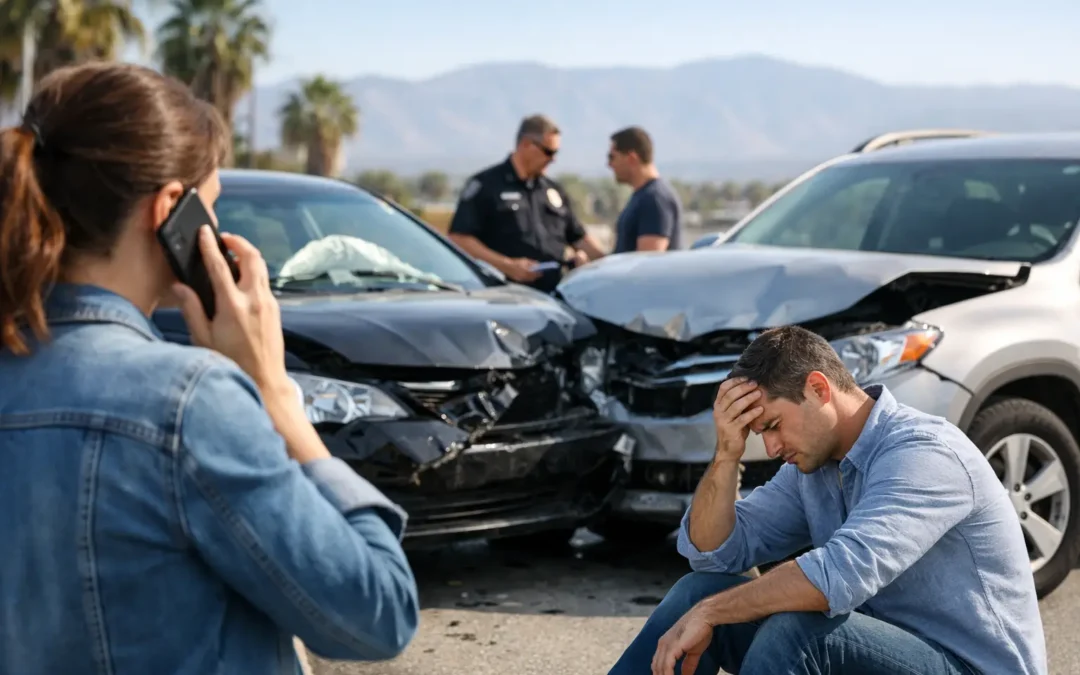
A crash can turn an ordinary Los Angeles commute into a confusing, painful day in seconds. You may be shaken up, worried about your vehicle, and facing calls from an insurer before you have even had time to see a doctor. Knowing what to do after a car accident can protect your health, preserve critical evidence, and keep an insurance company from taking advantage of the confusion.
The steps below apply to many California collisions, whether you were driving, riding as a passenger, walking, biking, or using a rideshare. Every situation is different, especially when serious injuries, disputed fault, or uninsured drivers are involved. Still, early decisions often shape what happens later.
First, protect people at the scene
If you can do so safely, move your vehicle out of traffic. Turn on hazard lights and call 911 if anyone is injured, the roadway is blocked, a driver appears impaired, or there is significant damage. Do not leave the scene of an accident involving injury or property damage. California law requires drivers to stop, exchange information, and provide reasonable assistance to injured people.
Check yourself before you start checking the vehicle. Adrenaline can hide pain. Neck, back, head, and abdominal injuries are not always obvious in the first few minutes. If you have numbness, dizziness, confusion, severe pain, difficulty breathing, or any concern that you may be seriously hurt, wait for emergency personnel and follow their instructions.
Keep your words measured. You can be polite and cooperative without apologizing or guessing about what happened. A simple statement such as, “Are you okay?” is appropriate. Statements like “I did not see you” or “This was my fault” can be taken out of context later, even when you were disoriented or missing key facts.
What to do after a car accident: document the facts
Evidence disappears quickly. Cars are towed, traffic cameras may overwrite footage, and witnesses become hard to locate. If your condition allows, use your phone to create a clear record before you leave the scene.
Collect the other driver’s name, phone number, address, driver’s license number, license plate number, insurance carrier, policy number, and vehicle information. If there are passengers, get their names and contact information as well. Ask responding officers for the report number and the agency handling the report.
Photos and video should show more than the dented bumper. Capture the overall scene, vehicle positions, every side of both vehicles, skid marks, debris, traffic signals, road conditions, weather, visible injuries, and nearby businesses or cameras. Take close-up and wide-angle shots. If a witness saw the collision, ask for their name and number. An independent witness can be particularly valuable when the other driver later changes their story.
If you cannot safely gather this information, do not push through pain or risk another collision. Ask a passenger, a trusted person, or an officer for help. Your health comes first.
Get medical care, even if you think you are fine
One of the most damaging mistakes after a crash is waiting too long to seek care because you hope the pain will fade. Some injuries, including concussions, whiplash, soft-tissue damage, and internal injuries, can worsen over hours or days. Prompt treatment creates a medical record connecting your symptoms to the collision and gives you the best chance to recover properly.
Emergency care may be necessary after a serious impact. In other cases, an urgent care visit, primary care appointment, or specialist referral may be appropriate. Follow the treatment plan, attend appointments, and tell your provider about every symptom, even if it seems minor. Do not minimize pain because you are worried about work, family obligations, or medical bills.
Keep copies of discharge instructions, prescriptions, imaging results, bills, and receipts. A short daily journal can also help. Note your pain levels, sleep problems, missed activities, medication effects, and days you cannot work. These details may become meaningful evidence of how the injury has affected your life.
Report the crash and protect required records
In California, you generally must report an accident to the DMV within 10 days when someone was injured or killed, or when property damage exceeds $1,000. This is done through an SR-1 form. The requirement applies even if you were not at fault and even if law enforcement prepared a report. Failing to file can lead to a suspended license.
You should also notify your own insurance company promptly. Give basic, accurate facts: the date, location, vehicles involved, and report number if available. Do not speculate about fault, provide a recorded statement to the other driver’s insurer, or accept an early payment without understanding what you are signing.
An insurer may sound friendly while looking for information it can use to reduce or deny your claim. You are not required to let the opposing insurer rush you into a decision. Before you give a recorded statement or sign a medical authorization, consider getting legal guidance.
Do not settle before you know the full cost of the crash
The first offer after a car accident is often based on what the insurer can see immediately: a repair estimate, an emergency room bill, and perhaps a few missed shifts. It may not account for future treatment, physical therapy, specialist care, lost earning capacity, ongoing pain, or the impact an injury has on your daily life.
Once you accept a settlement and sign a release, you generally cannot return for more money if your condition becomes worse. That is why timing matters. A fair resolution depends on the nature of your injuries, available insurance coverage, who caused the crash, whether multiple parties share fault, and the evidence supporting the claim.
This is especially true in collisions involving commercial trucks, rideshare drivers, delivery vehicles, motorcycles, pedestrians, or hit-and-run drivers. There may be additional policies, corporate defendants, or evidence that needs to be preserved quickly. A crash involving an Amazon Flex or other delivery driver, for example, may require a closer look at the driver’s status, the app activity, and applicable coverage at the time of impact.
Preserve the evidence you already have
Do not repair, sell, or dispose of your vehicle until it has been thoroughly documented and, when needed, inspected. Save damaged personal items such as a helmet, child safety seat, clothing, or glasses. Keep screenshots of texts with your employer about missed work and communications from insurers.
Avoid posting about the accident or your injuries on social media. An innocent photo, check-in, or comment can be misread by an insurance adjuster trying to argue that you are less injured than you claim. It is safer to keep details of the collision and your recovery private.
If you have photos, videos, dashcam footage, witness information, medical records, and correspondence in different places, create one folder and back it up. Small pieces of documentation can become powerful when they tell a consistent story.
Speak with a car accident lawyer when the stakes are high
You may be able to handle a minor property-damage claim on your own when no one is hurt and fault is clear. But legal help is often wise when you have injuries, mounting medical expenses, lost income, disputed liability, a low settlement offer, or pressure from an insurance company.
A personal injury lawyer can investigate the collision, obtain reports and available footage, identify all potential insurance coverage, calculate the full value of your losses, and handle insurer communications. That allows you to focus on medical recovery instead of arguing with adjusters while you are in pain.
At LionsGate Law Group, APC, our team understands that an accident claim is not just paperwork. It is about getting the care, financial support, and accountability you need after someone else’s negligence changes your life. We are prepared to fight for injured people and families across Los Angeles, the San Fernando Valley, and throughout California.
The hours after a collision may feel chaotic, but you do not have to solve every problem at once. Get safe, get medical attention, preserve what happened, and do not let an insurer force you into a fast decision before you understand your rights.