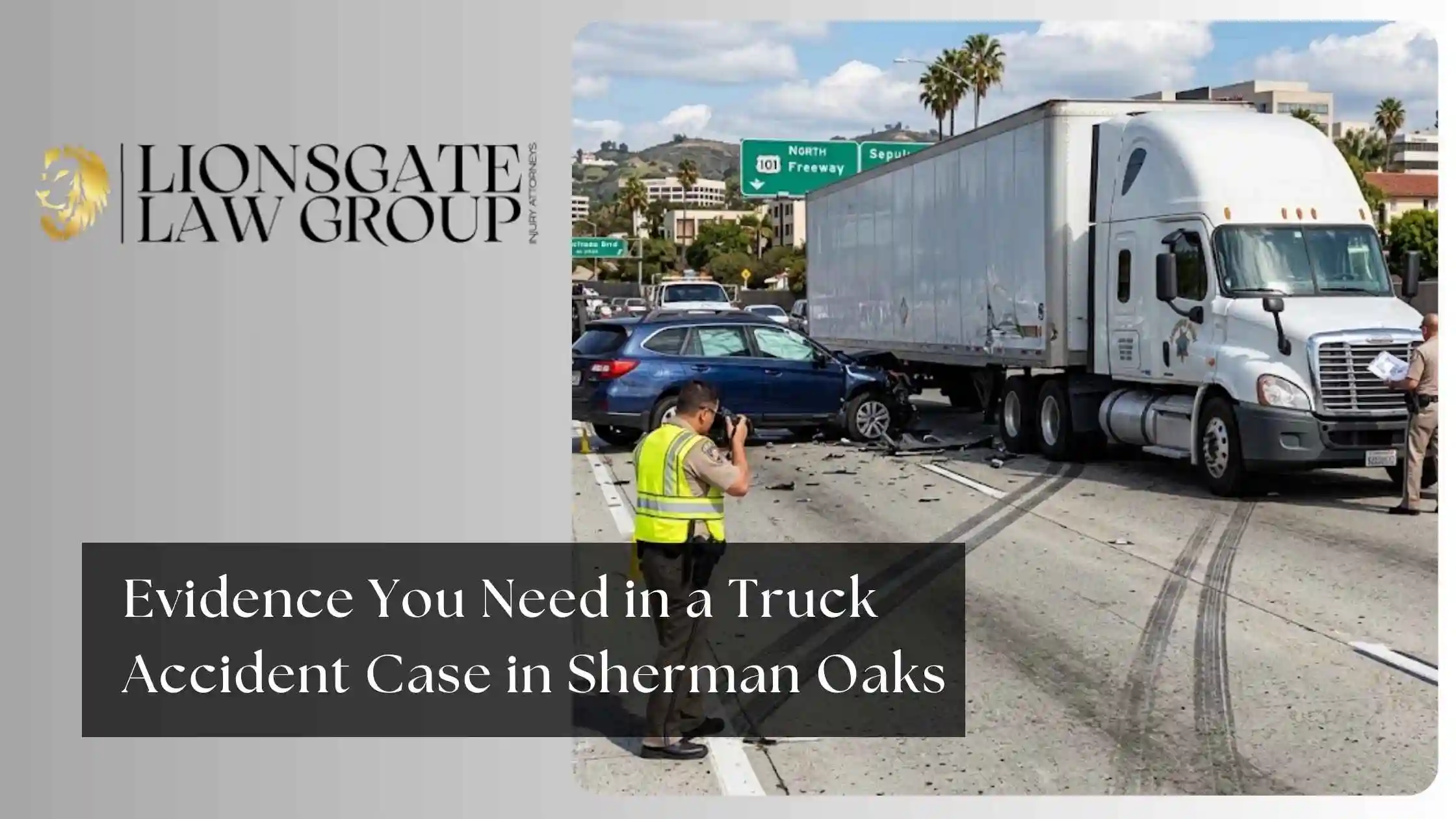
Truck accidents can be some of the most dangerous collisions on Sherman Oaks roads. Large commercial trucks can cause severe damage when they collide with passenger vehicles, potentially leaving victims with serious injuries, extensive medical treatment, and time away from work.
After a truck accident, the evidence surrounding the crash can be critical. Police officers and emergency personnel may document the scene, while trucking companies and insurers may also begin investigating what happened. Because important evidence may exist in different places, identifying and preserving it as soon as possible can be important to a truck accident claim.
What to Expect After a Truck Accident
After a truck accident in Sherman Oaks, emergency personnel and law enforcement may respond to the scene. Their immediate priorities include providing medical assistance, addressing safety concerns, documenting the collision, and arranging for damaged vehicles to be removed when necessary.
Truck accident victims may suffer serious or lasting injuries. Some may require extensive medical care or rehabilitation and may be unable to work while recovering.
At the same time, trucking companies and their insurance providers may have their own investigators reviewing the crash. This makes evidence preservation an important part of investigating a truck accident.
Evidence That Can Reveal Fault in Truck Accident Cases
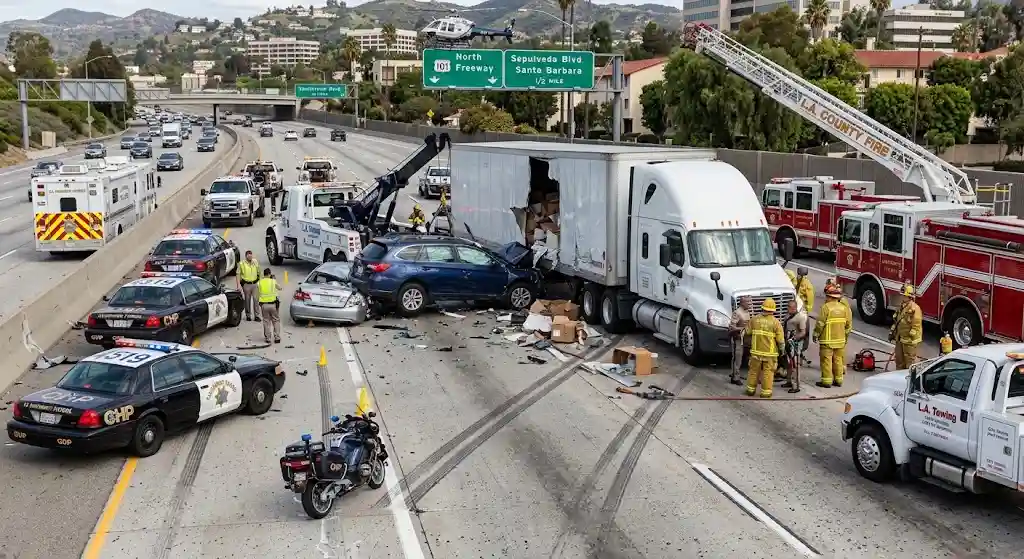
Determining who was responsible for a truck crash is not always straightforward. Several types of evidence can help establish what happened before and during the collision.
Surveillance Video or Dashcam Footage
Video footage can provide valuable information about how a truck accident occurred.
Dashcam recordings from vehicles and surveillance cameras near the accident scene may show traffic conditions, vehicle movements, braking, lane changes, or the collision itself.
Photographs can also help document the accident scene and damage to the vehicles involved. If you are physically able to do so safely after an accident, photographs of the vehicles, roadway, traffic conditions, and visible injuries may help preserve information about the crash.
Because surveillance footage may not be kept indefinitely, identifying potentially useful video sources promptly can be important.
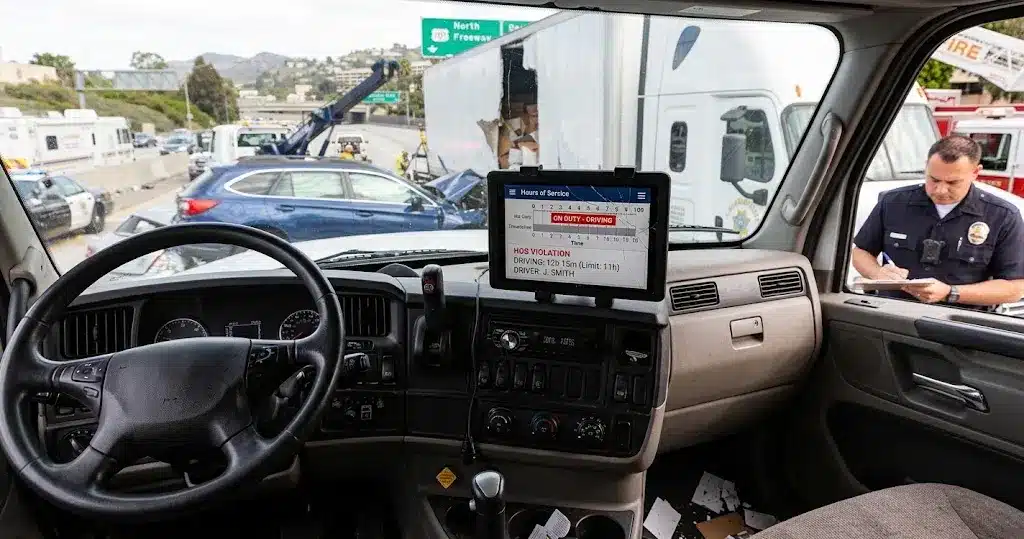
Electronic Logging Device Data
Commercial trucks may use electronic logging devices, commonly known as ELDs, to record information related to a driver’s hours of service and vehicle operation.
Depending on the available system and records, electronic data can help investigators examine information relevant to the truck’s operation around the time of a collision.
This type of evidence may be particularly important when questions arise about driver fatigue, hours of service, or what the truck was doing immediately before the crash.
Trucking Company Screening and Employment Records
The trucking company may have records concerning the driver involved in the collision.
Depending on the circumstances, relevant records may include information concerning driver qualifications, employment, training, and screening.
These records can become important when investigating whether the trucking company properly selected and qualified the driver or whether other issues involving the driver’s employment should be examined.
A truck accident attorney can determine what records may be relevant to the particular case and seek appropriate evidence through the legal process.
Eyewitness Testimony
People who witnessed the accident may provide important information about what happened before and during the collision.
An eyewitness may have seen a truck change lanes, brake suddenly, move through an intersection, or interact with another vehicle before the crash.
Witness accounts should be evaluated carefully, however. People may remember events differently, and factors such as their location, visibility, and how quickly the accident occurred can affect what they observed.
Truck Driver Statements
Statements made by a truck driver after an accident may also provide relevant information about the collision.
For example, a driver’s account may help establish what they saw, what they were doing immediately before the crash, or whether they noticed a problem with the truck.
Questions about driver fatigue, impairment, distraction, or other circumstances may also need to be investigated when supported by the available evidence.
Police, Medical, and Other Documentation
Documentation can provide an important record of the accident and its consequences.
Potentially relevant documents may include:
- Police reports
- Medical records
- Medical bills
- Photographs
- Insurance records
- Truck and vehicle inspection records
- Driver records
- Electronic data
- Other documents related to the collision
Medical documentation can be particularly important for establishing the nature and extent of injuries and the treatment required after the accident.
How to Preserve Evidence After a Truck Accident
Preserving evidence after a truck accident can be crucial. Some information may be stored electronically, while other evidence may be held by a trucking company, driver, insurer, or another party.
If relevant evidence is lost or destroyed, it can make it more difficult to determine what happened.
This is one reason professional legal assistance can be valuable after a serious truck crash. An attorney can identify potentially important evidence and take appropriate steps to seek its preservation.
Spoliation Letters
One legal tool that may be used to help preserve evidence is a spoliation letter. This is a written notice requesting that relevant evidence be preserved because it may be important to an anticipated or existing legal claim.
Depending on the circumstances, a preservation request may identify specific categories of evidence that should not be destroyed, altered, or discarded.
The purpose is to help prevent the loss of evidence that may later be needed to investigate or litigate the truck accident claim.
Why Professional Legal Help Matters
Truck accident investigations can involve more than determining which vehicle struck another. Evidence may be held by different parties and may include electronic records, company documents, photographs, witness accounts, and medical information.
Trying to investigate all of these issues without professional assistance can be difficult, particularly while recovering from an injury.
LionsGate Law Group APC handles truck accident cases in Sherman Oaks and provides legal representation to people injured in truck crashes. The firm’s Sherman Oaks truck accident practice focuses on investigating the circumstances of truck collisions and helping injured victims pursue their legal claims.
An attorney can help identify relevant evidence, communicate with insurance companies, investigate potentially responsible parties, and take appropriate steps to protect evidence when necessary.
Let a Sherman Oaks Truck Accident Lawyer Help
Evidence can play an important role in establishing what caused a truck accident and the losses that followed. Dashcam footage, surveillance video, electronic records, company documents, witness statements, and accident reports may all help build a clearer picture of the collision.
If you or someone you love was injured in a truck accident in Sherman Oaks, it is important to consider legal assistance before important evidence becomes unavailable.
LionsGate Law Group APC represents truck accident victims and can help investigate the circumstances surrounding a crash and pursue the compensation supported by the facts of the case.
Call LionsGate Law Group APC at 818-574-5494 for a free case review if you have been injured in a Sherman Oaks truck accident.