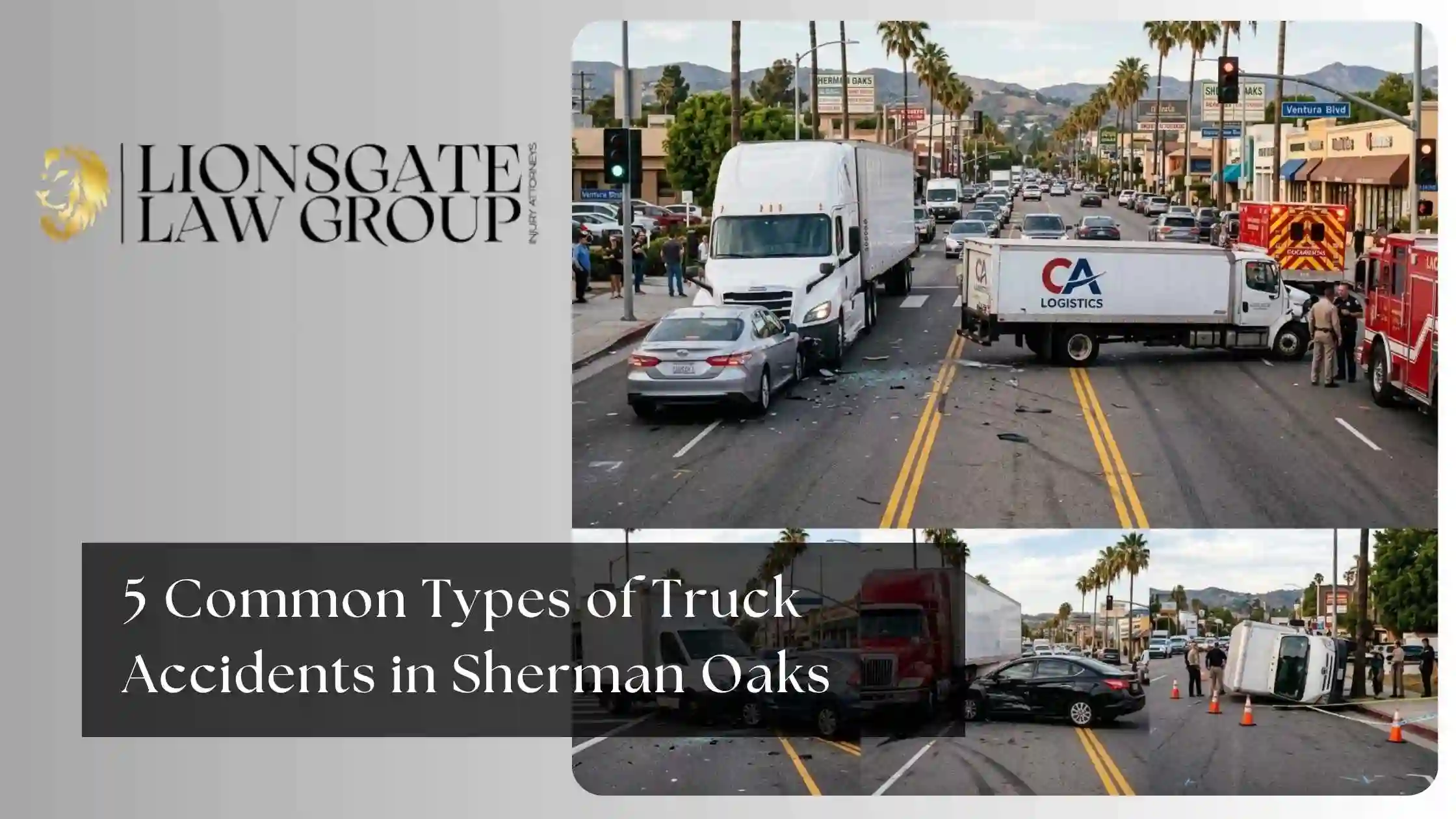
Truck accidents in Sherman Oaks can cause serious injuries, vehicle damage, and complicated insurance claims. With commercial trucks, semi-trucks, and delivery vehicles traveling throughout the San Fernando Valley and Los Angeles County, collisions can happen in different ways and involve several potentially responsible parties.
The size and weight of commercial trucks can make certain collisions particularly dangerous for people in smaller vehicles. Other factors, such as driver fatigue, improper cargo loading, and defective equipment, may also contribute to a crash.
Understanding the most common types of truck accidents can help you recognize how these collisions happen and why a thorough investigation may be important. Lionsgate Law Group APC represents people injured in truck accidents in Sherman Oaks and throughout the San Fernando Valley.
What Are the Most Common Types of Truck Accidents?
Truck accidents can involve rollovers, head-on collisions, rear-end crashes, jackknife incidents, and tire blowouts. Each type has different possible causes and can create distinct risks for drivers, passengers, and other road users.
Here are five common types of truck accidents and some factors that may contribute to them.
1. Truck Rollovers
Truck rollovers occur when a truck tips onto its side or roof. Because commercial trucks are large and may carry heavy cargo, a rollover can create serious hazards for nearby vehicles.
These accidents may block multiple lanes, spill cargo onto the roadway, or involve other vehicles. The consequences depend on the truck’s movement, the surrounding traffic, and the circumstances of the collision.
What Causes Truck Rollovers?
Several factors may contribute to a rollover, including:
- Taking a turn too quickly.
- Sudden steering movements or swerving.
- Improperly loaded or unevenly distributed cargo.
- Excessive speed for road conditions.
- Vehicle or equipment problems.
A truck’s high center of gravity can make it more susceptible to tipping during certain maneuvers. However, the cause of a particular rollover must be determined from the available evidence.
Why Investigation Matters
A rollover involving a commercial truck may require an investigation into driver conduct, cargo loading, vehicle maintenance, and other relevant circumstances.
Lionsgate Law Group APC investigates truck accident claims, including the potential involvement of trucking companies alongside drivers.
2. Head-On Truck Collisions
A head-on collision occurs when the front of one vehicle strikes the front of another. When a commercial truck collides head-on with a passenger vehicle, the difference in vehicle size and weight can increase the risk of severe injuries.
These crashes may occur when a vehicle crosses into oncoming traffic or travels in the wrong direction.
Possible Causes of Head-On Collisions
Factors that may contribute include:
- Driver fatigue or falling asleep behind the wheel.
- Distracted driving.
- Impaired driving.
- Unsafe passing or loss of vehicle control.
- Traffic violations or other unsafe driving behavior.
Fatigue is a particular concern in commercial trucking because drivers must comply with applicable hours-of-service requirements.
What Happens After a Head-On Truck Accident?
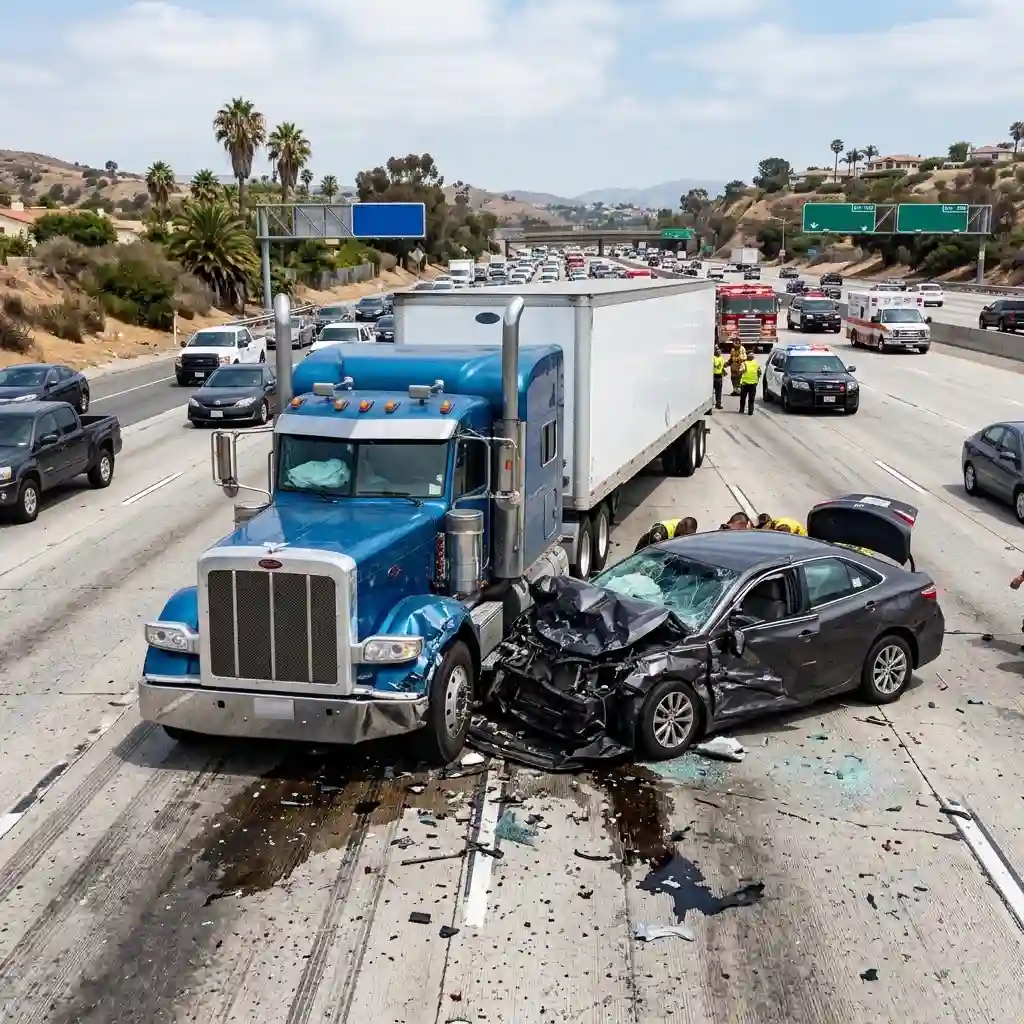
People involved may face significant injuries, vehicle damage, and financial losses. The extent of the harm depends on the collision and the injuries sustained.
An investigation may examine the driver’s actions, available electronic logging device records, and other evidence relevant to the crash.
3. Rear-End Truck Accidents
Rear-end truck accidents happen when a truck strikes the vehicle in front of it. These collisions may occur when traffic slows suddenly, a vehicle stops, or the truck driver fails to respond in time.
In Sherman Oaks and the surrounding San Fernando Valley, commercial vehicles may travel alongside passenger cars in heavy traffic. Sudden changes in traffic flow can create situations in which drivers need to react quickly.
Why Do Rear-End Truck Accidents Happen?
Possible contributing factors include:
- Following another vehicle too closely.
- Distracted driving.
- Excessive speed for traffic conditions.
- Driver fatigue.
- Brake or other equipment problems.
A truck’s weight and braking characteristics can affect stopping distance. The actual stopping distance depends on factors such as speed, road conditions, vehicle condition, and driver response.
Who May Be Responsible?
Responsibility depends on the evidence. The truck driver may be responsible in some cases, while other circumstances may require examining vehicle maintenance or the conduct of additional parties.
Lionsgate Law Group APC investigates truck accident claims involving drivers and trucking companies to identify potentially responsible parties based on the facts.
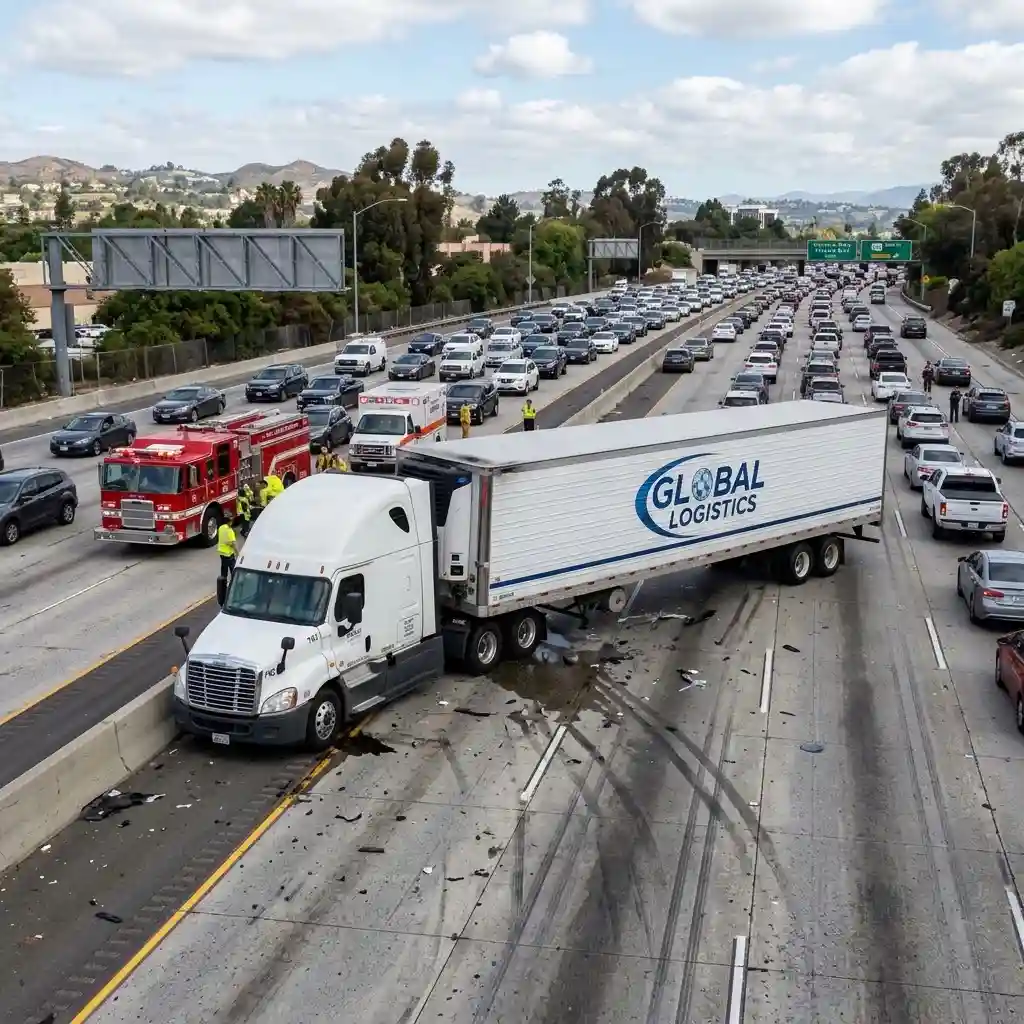
4. Jackknife Truck Accidents
A jackknife accident occurs when a truck’s tractor and trailer fold toward one another at an angle, resembling the shape of a folding pocketknife.
This can happen when the trailer swings out of alignment with the cab. A jackknifing truck may block multiple lanes or collide with nearby vehicles.
What Causes a Truck to Jackknife?
Possible contributing factors include:
- Sudden braking.
- Loss of traction on wet or slippery roads.
- Excessive speed for road conditions.
- Abrupt steering movements.
- Improper cargo loading or weight distribution.
When a truck loses traction, the trailer may not follow the tractor’s direction as intended. However, the exact cause depends on the circumstances of the crash.
Why These Accidents Can Be Serious
A jackknifing truck can create a hazard across several lanes of traffic. Other drivers may have limited time or space to avoid the vehicle, increasing the risk of secondary collisions.
A detailed investigation may consider the driver’s actions, road conditions, cargo loading, and the condition of the truck.
5. Truck Tire Blowouts
A tire blowout occurs when a tire suddenly loses air pressure, potentially causing the driver to lose control of the vehicle.
For a commercial truck, a blowout can be particularly hazardous because of the vehicle’s size, weight, and the possibility of a trailer or cargo becoming unstable.
What Causes Truck Tire Blowouts?
Possible causes include:
- Worn or damaged tires.
- Improper tire pressure.
- Punctures or cuts.
- Excessive heat or stress.
- Poor maintenance or road hazards.
A blowout does not automatically establish negligence. Investigators must examine the circumstances and determine whether a relevant party failed to meet an applicable duty.
Can a Tire Blowout Lead to Other Accidents?
Yes. A driver may struggle to maintain control after a sudden tire failure. The truck could veer into another lane, strike another vehicle, or stop unexpectedly.
In some cases, an investigation may examine tire condition, maintenance records, and whether a vehicle defect or other factor contributed to the collision.
How Lionsgate Law Group Helps With Truck Accident Claims
Truck accident cases can involve more than the actions of the driver. Depending on the circumstances, a claim may require examining the trucking company, vehicle owner, maintenance practices, cargo loading, or other potentially responsible parties.
Lionsgate Law Group APC represents people injured in semi-truck, big-rig, commercial fleet, and delivery truck accidents in Sherman Oaks and the San Fernando Valley.
Investigating Trucking Companies and Drivers
The firm investigates potentially responsible parties and reviews evidence relevant to the collision. This may include available driver records, vehicle maintenance documentation, and other trucking company records.
Reviewing Federal Trucking Regulations
Commercial carriers are subject to applicable Federal Motor Carrier Safety Administration regulations, including rules concerning hours of service, maintenance, and driver qualifications.
When relevant, reviewing these records may help determine whether a violation contributed to a crash.
Examining Driver Fatigue
Driver fatigue may be relevant in certain truck accident cases. Electronic logging device records and other available documentation can help establish driving and rest periods.
The importance of this evidence depends on the facts of the individual case.
Frequently Asked Questions
What is the most dangerous type of truck accident?
The severity of a truck accident depends on the circumstances, including vehicle speed, impact location, injuries, and the vehicles involved. Rollovers, head-on collisions, and jackknife crashes can create serious risks, but no single type is always the most dangerous.
Can a trucking company be responsible for an accident?
Depending on the facts and applicable law, a trucking company may be responsible for its own negligence or may have legal responsibility for a driver’s conduct. An investigation is needed to determine which parties may be liable.
What evidence matters in a truck accident claim?
Potentially relevant evidence may include photographs, witness statements, vehicle inspection records, maintenance documents, electronic logging device records, and medical documentation. The evidence needed depends on the collision.
What should I do after a truck accident in Sherman Oaks?
Prioritize safety and medical care, contact emergency services when necessary, and preserve relevant information when it is safe to do so. Lionsgate Law Group recommends documenting the scene and contacting the firm before speaking with an insurance adjuster about your claim.
How long do I have to file a truck accident claim in California?
California’s general statute of limitations for many personal injury claims is two years from the date of injury. Exceptions and different deadlines may apply, so seek legal advice promptly about the deadline for your specific circumstances.
Contact Lionsgate Law Group APC After a Truck Accident
Whether your accident involved a rollover, head-on collision, rear-end crash, jackknife, or tire blowout, understanding your legal options can be an important part of moving forward.
Lionsgate Law Group APC represents people injured in truck accidents throughout Sherman Oaks, the San Fernando Valley, Los Angeles County, and California.
The firm’s truck accident services include investigating drivers and trucking companies, reviewing relevant records, and helping clients navigate personal injury claims.
Call Lionsgate Law Group APC at 800-454-5299 for a free consultation.
You can also contact the firm’s Sherman Oaks office at 15303 Ventura Blvd, Suite 1050, Sherman Oaks, CA 91403, or call 818-574-5494.
This content is for general informational purposes only and is not legal advice. Viewing this information does not create an attorney-client relationship. Prior results do not guarantee a similar outcome.