

Brain injuries can be difficult to recognize because some symptoms are not immediately visible. Unlike an obvious broken bone or external wound, a brain injury may affect a person’s memory, concentration, balance, communication, behavior, or ability to work without immediately showing outward signs.
A serious brain injury can have consequences that continue long after the original accident. Depending on the severity and location of the injury, a person may require extensive medical treatment, rehabilitation, assistance with daily activities, or long-term care.
In Sherman Oaks and throughout the San Fernando Valley, traumatic brain injuries can occur in car accidents, truck accidents, falls, and other incidents involving significant trauma. When another party’s negligence causes a serious brain injury, the injured person may also face substantial medical expenses, lost income, and other losses.
Lionsgate Law Group APC represents people with traumatic brain injuries as part of its catastrophic injury practice in Sherman Oaks. The firm’s current catastrophic injury service specifically includes traumatic brain and spinal cord injuries and emphasizes detailed medical documentation and long-term care planning for these cases.
What Is Considered a Serious Brain Injury?
There is no single symptom or measurement that determines whether every brain injury should be considered “serious.” Brain injuries exist on a wide spectrum, and their effects can vary from person to person.
A brain injury may be particularly serious when it causes significant or lasting impairment, requires extensive medical treatment, or affects a person’s ability to work or live independently.
Examples of serious traumatic brain injuries can include severe brain trauma, certain brain bleeds, diffuse axonal injuries, and penetrating brain injuries.
The severity of an injury should be evaluated by qualified medical professionals. An attorney can help with the legal and financial aspects of a claim but cannot diagnose a brain injury.
Common Signs and Symptoms of a Serious Brain Injury
Brain injury symptoms can vary depending on the type and severity of the injury.
Possible symptoms include:
- Loss of consciousness
- Confusion or disorientation
- Memory problems
- Persistent headaches
- Dizziness or balance problems
- Nausea or vomiting
- Changes in vision
- Difficulty concentrating
- Problems with speech or communication
- Changes in mood or behavior
- Seizures
- Weakness or coordination problems
Some symptoms may appear immediately, while others may become noticeable later.
If you have suffered a blow to the head or been involved in an accident and develop concerning symptoms, seek appropriate medical attention promptly.

Types of Serious Brain Injuries
Several different types of brain injuries can result from significant trauma.
Severe Traumatic Brain Injury
A severe traumatic brain injury can affect brain function and may result in substantial physical, cognitive, or behavioral impairments.
Depending on the injury, a person may require hospitalization, rehabilitation, and continuing medical care.
The long-term consequences can vary considerably from one individual to another.
Diffuse Axonal Injury
Diffuse axonal injury can occur when strong forces cause the brain to move or rotate within the skull, damaging nerve fibers.
It can occur in high-impact accidents, including some motor vehicle collisions.
Because the effects can be significant, a diffuse axonal injury may require extensive medical treatment and rehabilitation.
Brain Bleeding
Trauma can cause bleeding in or around the brain.
Different forms of intracranial bleeding include epidural and subdural hematomas, among others.
Brain bleeding can be a medical emergency and requires prompt evaluation and treatment by qualified healthcare professionals.
Penetrating Brain Injury
A penetrating brain injury occurs when an object penetrates the skull and damages brain tissue.
These injuries can be extremely serious and require immediate emergency medical treatment.
How Can a Serious Brain Injury Affect Your Life?
The consequences of a serious brain injury may extend beyond the initial medical emergency.
Depending on the injury, a person may experience difficulties with:
Work and Income
A serious brain injury may prevent someone from returning to work temporarily or permanently.
Even when a person can return to work, the injury may affect their ability to perform the same duties or work the same number of hours.
Lost income can therefore become an important part of a personal injury claim.
Daily Activities
Some people with significant brain injuries may need assistance with everyday activities.
Depending on the severity of the injury, this could involve rehabilitation, therapy, personal assistance, or other forms of continuing care.
Family and Relationships
A serious brain injury can affect more than the injured person.
Changes in memory, communication, mood, personality, or independence can also affect relationships with family members and caregivers.
Long-Term Medical Needs
Some serious brain injuries require ongoing treatment and rehabilitation.
Lionsgate Law Group’s current catastrophic injury page notes that traumatic brain injury cases can require detailed medical documentation and long-term care planning.
For permanent disability cases, the firm states that it works with medical and life-care experts to project future care needs and their associated costs.
How Much Can You Claim for a Serious Brain Injury?
There is no reliable fixed settlement amount that applies to every serious brain injury claim.
The value of a case depends on its individual circumstances, including the severity of the injury, medical treatment, lost income, future care requirements, liability, and other legally recognized losses.
For this reason, claims should not be evaluated using arbitrary minimum or maximum settlement figures.
Medical Expenses
Medical expenses may include emergency treatment, hospitalization, diagnostic testing, rehabilitation, therapy, medication, and other necessary treatment.
Where supported by the evidence, future medical and care-related expenses may also be relevant.
Lost Income
A serious brain injury may prevent someone from working during recovery.
If the injury causes lasting impairment, the impact on future earning capacity may also need to be considered when supported by appropriate evidence.
Pain and Suffering
A serious brain injury can affect a person’s physical comfort, emotional well-being, independence, and ability to participate in normal activities.
Pain and suffering may be considered as part of a personal injury claim when permitted under applicable California law.
Future Care
Some catastrophic brain injuries require long-term medical treatment, rehabilitation, or assistance.
Lionsgate Law Group states that its catastrophic injury practice works with medical and life-care experts to help document future care needs in permanent disability cases.
Why Medical Documentation Is Important
Medical documentation can be particularly important in a serious brain injury claim.
Unlike some visible injuries, the consequences of a brain injury may involve cognitive or neurological changes that are not obvious from looking at the injured person.
Medical records can help document:
- The diagnosis
- Symptoms
- Treatment
- Testing
- Rehabilitation
- Changes in physical or cognitive function
- Continuing medical needs
- Prognosis when provided by medical professionals
Lionsgate Law Group specifically notes that traumatic brain injury cases require detailed medical documentation and long-term care planning.
How a Brain Injury Attorney Can Help
A serious brain injury claim can involve complicated medical, financial, and legal issues.
An attorney can investigate the circumstances of the accident and determine whether another party may be legally responsible.
Investigating Liability
Depending on how the injury occurred, potentially responsible parties could include a driver, property owner, employer, or another party.
Lionsgate Law Group states that it investigates potentially responsible parties in catastrophic injury cases based on the facts of each claim.
Gathering Evidence
Evidence may include:
- Accident reports
- Photographs and videos
- Witness statements
- Medical records
- Employment records
- Insurance information
- Accident-scene evidence
- Expert opinions when appropriate
Preserving evidence can be important because certain evidence may become difficult to obtain as time passes.
Evaluating Future Losses
A serious brain injury may create expenses and losses that continue for years.
An attorney can work with appropriate professionals to understand the potential financial impact of permanent disability and future care.
The firm’s current catastrophic injury page states that it works with medical and life-care experts to project future care needs in permanent disability cases.
What Should You Do After a Serious Brain Injury?
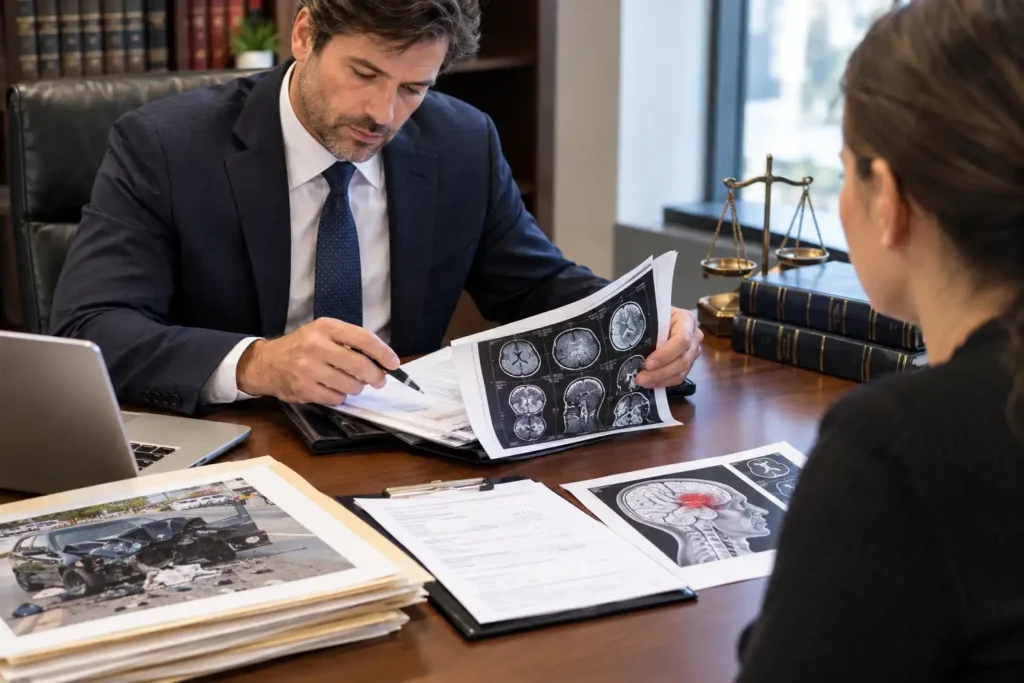
If you believe you have suffered a brain injury following an accident, your health should be the first priority.
Seek Medical Care
Get appropriate medical attention as soon as possible, especially if you have experienced loss of consciousness, confusion, severe headache, vomiting, seizures, or other concerning symptoms.
Follow the instructions provided by your healthcare professionals.
Document the Accident
When it is safe to do so, preserve information about the accident.
Depending on the circumstances, this may include photographs, videos, witness information, accident reports, and other relevant records.
Keep Medical and Employment Records
Keep copies of medical documentation and records relating to missed work or lost income.
These records may become important when evaluating the consequences of the injury.
Speak With an Attorney Before Settling
Lionsgate Law Group’s current catastrophic injury FAQ recommends seeking medical care first, documenting the scene, and contacting the firm before speaking with an insurance adjuster about a catastrophic injury claim.
If an insurance company has contacted you after a serious brain injury, consider obtaining legal advice before signing documents or accepting a settlement.
When Should You Contact a Brain Injury Attorney?
Consider speaking with an attorney if:
- You suffered a significant head or brain injury.
- Another person may have caused the accident.
- You have substantial medical expenses.
- You cannot return to work.
- Your injury requires continuing treatment or rehabilitation.
- You may need long-term care.
- An insurance company disputes responsibility.
- The long-term consequences of your injury are uncertain.
Early legal guidance can help identify what evidence should be preserved and what legal deadlines may apply to your claim.
Contact a Catastrophic Injury Lawyer in Sherman Oaks
A serious brain injury can change many aspects of a person’s life. Medical treatment, rehabilitation, lost income, and future care needs can create significant challenges for an injured person and their family.
If another party’s negligence caused your injury, you may have a legal claim for compensation.
Lionsgate Law Group APC represents people with traumatic brain injuries as part of its catastrophic injury practice in Sherman Oaks and throughout the San Fernando Valley. The firm’s current service page identifies traumatic brain and spinal cord injuries as an area of its catastrophic injury practice and emphasizes medical documentation and long-term care planning.
Call Lionsgate Law Group at 800-454-5299 for a free consultation about your potential catastrophic injury claim.
The firm’s Sherman Oaks office is located at 15303 Ventura Blvd, Suite 1050, Sherman Oaks, CA 91403.
This article is for general informational purposes only and is not medical or legal advice. Brain injury symptoms, treatment, and outcomes vary. Every legal claim depends on its specific facts and applicable California law.