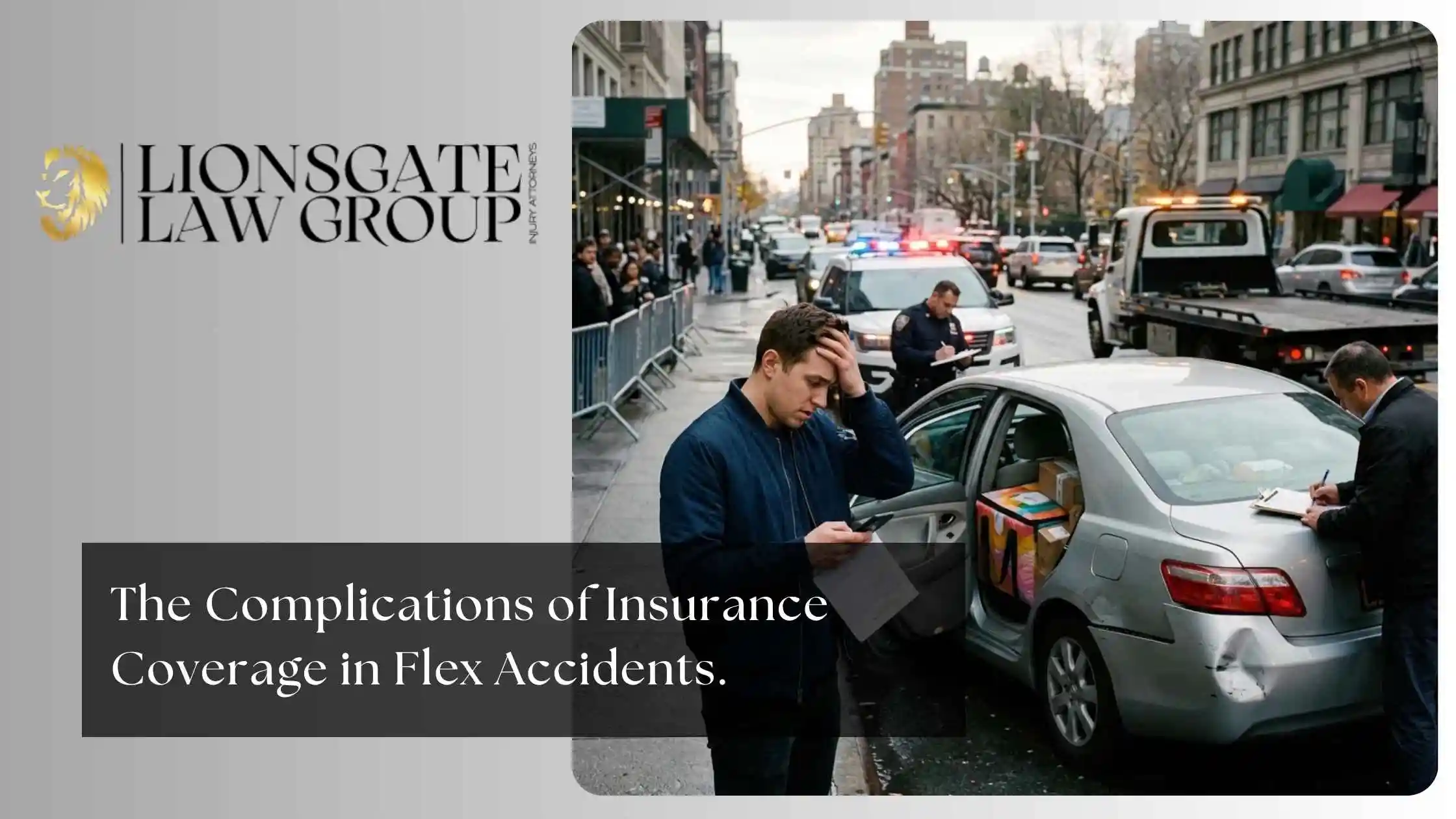
Sherman Oaks has busy roads, residential delivery routes, and commercial areas where Amazon Flex, DoorDash, and other gig economy drivers regularly operate. With delivery vehicles moving through Ventura Boulevard, Sepulveda Boulevard, and surrounding neighborhoods, accidents can happen when drivers become distracted, rush between deliveries, or encounter unexpected traffic conditions. However, getting compensation after these collisions is not always straightforward. Insurance Coverage in gig economy accidents can be complicated because drivers often use personal vehicles for commercial activities, creating questions about which policy applies and who must pay for injuries and property damage.
Unlike traditional company vehicles, gig economy drivers may operate under independent contractor arrangements. Their personal insurance policies, platform-provided commercial coverage, and other applicable policies may all become relevant after a collision. Understanding these differences is essential for accident victims seeking compensation.
Why Insurance Coverage Is Complicated in Gig Economy Accidents
Traditional auto insurance is generally designed for personal vehicle use. However, delivering food, transporting packages, and accepting app-based work can change how an insurance company evaluates a driver’s activities.
Many personal auto policies contain business-use exclusions or limitations. As a result, an insurer may question whether coverage applies when its policyholder causes an accident while completing a delivery.
The situation becomes more complicated when the delivery platform provides separate insurance protection that applies only during certain activities.
For example, an Amazon Flex driver may be covered differently depending on whether the driver is actively completing a delivery block or using the vehicle for personal purposes. Similarly, DoorDash coverage depends on the driver’s delivery status and the applicable policy conditions.
An accident victim may therefore need to investigate several policies before determining which insurer is responsible.
Understanding the Different Types of Gig Economy Insurance
1. Personal Auto Insurance
Personal auto insurance generally covers everyday driving, including commuting, errands, and personal trips. However, coverage for commercial delivery activities may be restricted.
If a DoorDash or Amazon Flex driver causes an accident while working, the personal insurer may investigate whether the vehicle was being used for business purposes.
This can result in coverage disputes, delayed claims, or disagreements over which insurance policy should respond.
2. Commercial Auto Insurance
Commercial auto insurance is designed to address risks associated with business-related vehicle use.
Some delivery platforms maintain commercial liability coverage for qualifying accidents involving their drivers. However, coverage is not necessarily available throughout every stage of a driver’s work.
The policy may distinguish between waiting for an order, accepting a delivery, traveling to a pickup location, and completing the delivery.
3. Platform-Provided Insurance
Platforms such as Amazon Flex and DoorDash have insurance arrangements that may apply under specific circumstances.
DoorDash, for example, describes third-party liability coverage for qualifying active deliveries in most states. Its coverage generally addresses injuries and property damage caused to others, rather than automatically covering damage to the driver’s own vehicle. Dasher Central+1
Amazon Flex also involves insurance considerations tied to delivery activity and applicable policy conditions. These distinctions make it important to establish precisely what the driver was doing when the accident happened.
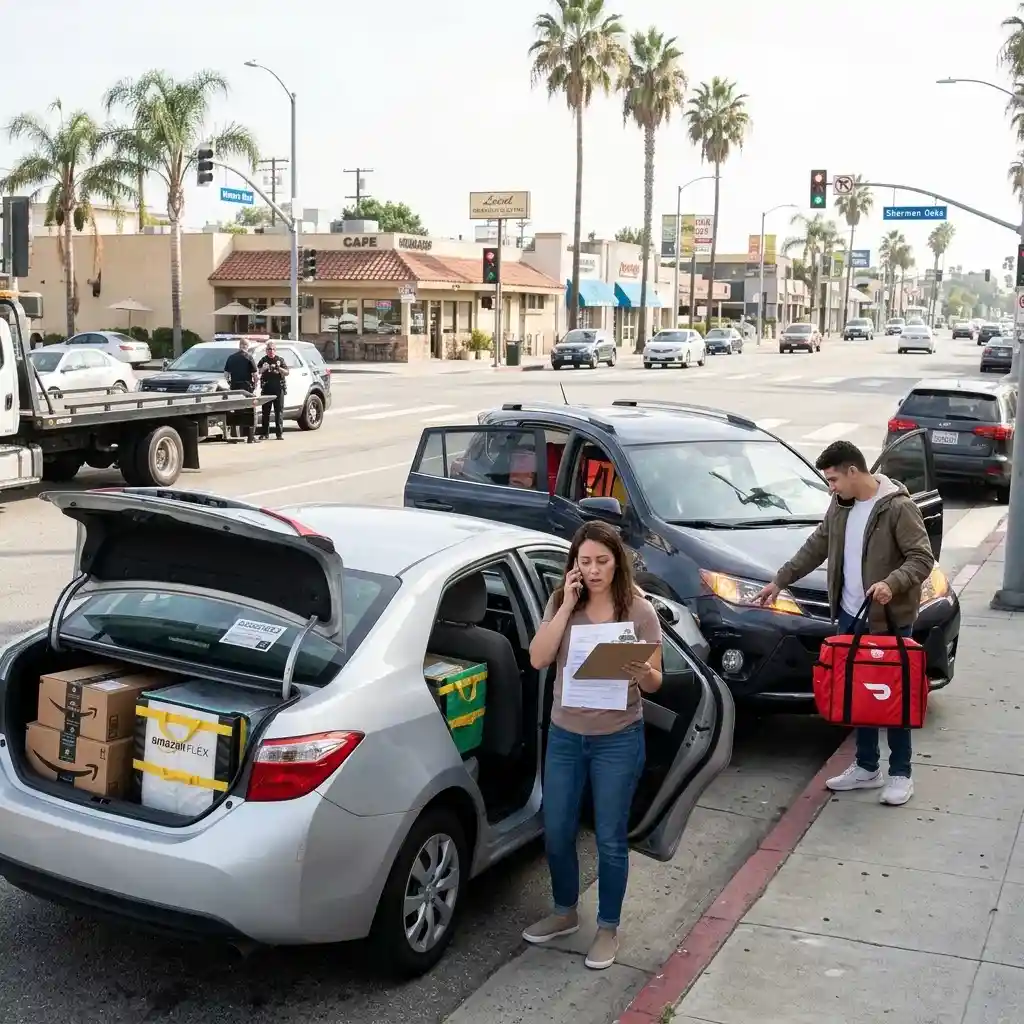
How a Driver’s App Status Affects Insurance Coverage
One of the most important factors in a gig economy accident claim is the driver’s activity at the exact time of the collision.
When the Driver Is Offline
If a driver is not logged into a delivery platform and is using the vehicle for personal purposes, their personal auto insurance will generally be the primary policy considered.
However, the insurer must still review the policy terms and accident circumstances.
When the Driver Is Logged In but Waiting for an Order
Some platforms distinguish between drivers who are available to receive delivery requests and those who have accepted an order.
This distinction matters because certain platform policies may provide limited coverage during specific periods, while others may leave the driver’s personal insurance as the primary coverage.
When the Driver Is Actively Delivering
An accepted delivery may trigger additional platform-provided insurance coverage, depending on the company, location, and policy conditions.
For example, DoorDash defines its Delivery Service Period as beginning when a driver accepts a delivery request and ending when the order is delivered, unassigned, or canceled. DoorDash Help Center
Amazon Flex drivers also have delivery-related coverage considerations. Determining whether the driver was actively working, traveling between delivery locations, or using the vehicle personally can help establish which insurance policies may apply.
Common Insurance Problems After a Gig Economy Accident
Accident victims may encounter several obstacles when attempting to recover compensation.
Disputes Between Insurance Companies
Personal auto insurers and platform insurance providers may disagree about which policy should cover the accident. Each company may investigate the driver’s status, the purpose of the trip, and the applicable coverage conditions.
These disagreements can delay claim decisions and make the process frustrating for injured people.
Independent Contractor Classification
Amazon Flex and many other gig economy drivers operate as independent contractors. This classification can complicate questions about whether a delivery company is legally responsible for a driver’s negligence.
However, independent contractor status does not automatically eliminate every potential claim against a platform or another responsible party.
Lionsgate Law Group APC investigates employment classification issues, applicable insurance policies, and other circumstances that may affect recovery.
Insufficient Insurance Limits
Even when an applicable policy exists, its coverage limits may not be enough to compensate everyone injured in a serious collision.
When several people suffer injuries, available insurance limits can become particularly important. An attorney may also investigate other potential sources of recovery, including additional liable parties and applicable uninsured or underinsured motorist coverage.
Delayed or Denied Claims
Insurance companies may request additional documentation, investigate conflicting statements, or question whether a particular policy applies.
Without a clear understanding of gig economy insurance arrangements, accident victims may struggle to respond effectively to these challenges.
Job Story: A Complicated Delivery Accident in Sherman Oaks
Illustrative scenario, not an actual Lionsgate Law Group client case.
Consider a Sherman Oaks resident traveling through a residential neighborhood when a delivery driver suddenly turns across traffic while attempting to reach a customer’s address. The collision causes significant vehicle damage and leaves the resident with injuries requiring medical treatment.
Initially, the injured driver contacts the delivery driver’s personal insurance company. However, the insurer questions whether the vehicle was being used for commercial delivery purposes at the time.
The injured person then discovers that the driver was completing an active delivery through a gig economy application.
Now, the claim requires more than a basic insurance report. Investigators must establish the driver’s app status, identify applicable platform insurance, review the personal policy, and determine whether other parties contributed to the accident.
With assistance from an experienced personal injury attorney, the injured person can have the available evidence investigated, potential coverage sources identified, and damages properly evaluated.
This is why professional legal representation can make a meaningful difference in complicated delivery accident claims.
Professional Legal Assistance Makes a Difference
Gig economy insurance claims require careful investigation because several policies, insurers, and potentially responsible parties may be involved. Trying to resolve these issues without understanding insurance contracts and personal injury law can put accident victims at a disadvantage.
Lionsgate Law Group APC is a California personal injury law firm based in Sherman Oaks. Led by founder Sayan Aboudi, Esq., the firm represents people injured in Amazon Flex delivery accidents and other vehicle-related incidents throughout Los Angeles County and California.
Investigating Every Available Insurance Policy
The firm evaluates the driver’s personal insurance, applicable commercial coverage, and other potential sources of compensation. This helps identify which policies may respond to the collision.
Examining Delivery Records and Accident Evidence
Delivery app records, timestamps, driver activity, police reports, witness statements, and available surveillance footage can help establish what happened.
Lionsgate Law Group APC investigates whether delivery schedule pressure or unsafe driving contributed to the collision and whether additional parties may share responsibility.
Evaluating the Full Extent of Your Losses
A serious delivery accident can affect more than your vehicle. Medical expenses, lost income, rehabilitation, future treatment needs, and pain and suffering may all be relevant to a personal injury claim.
The firm evaluates these damages based on the available evidence and the individual circumstances of the case.
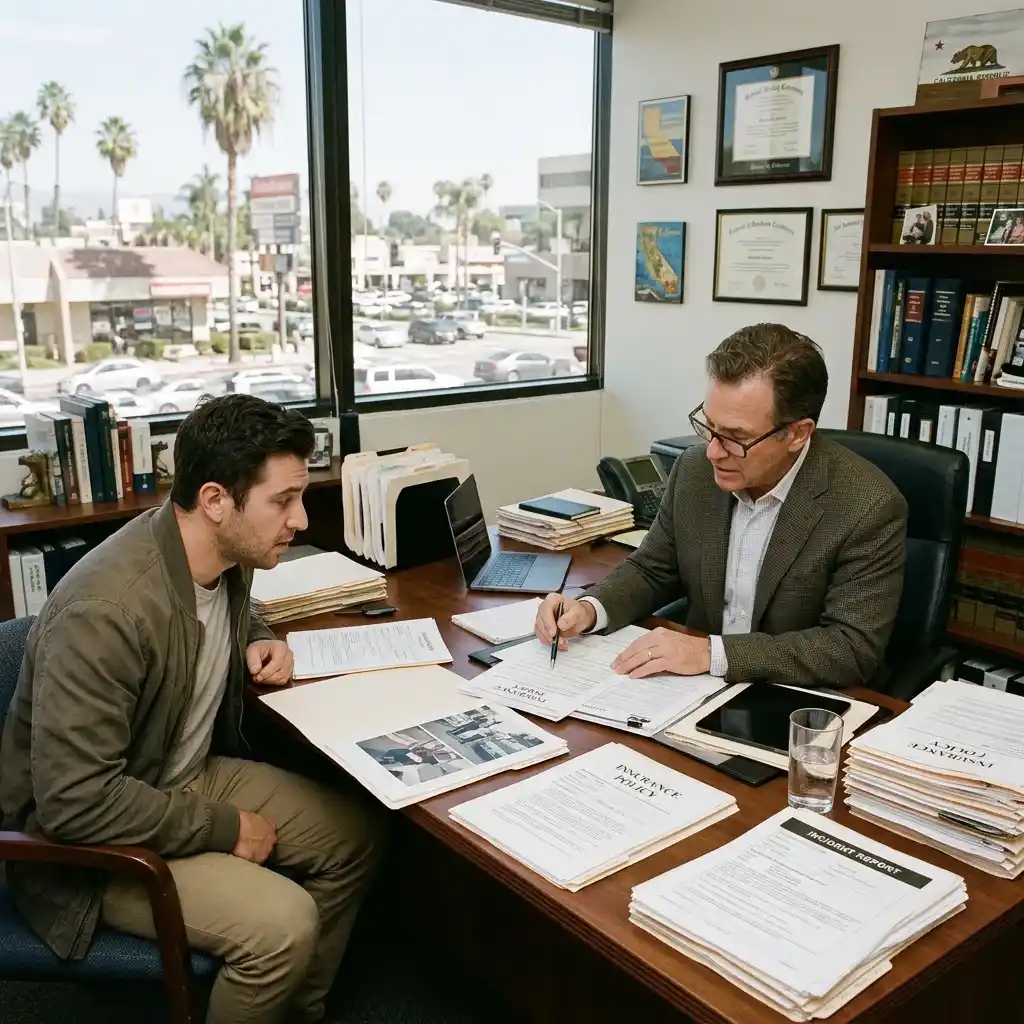
What to Do After a Gig Economy Delivery Accident
If you are involved in an accident with an Amazon Flex, DoorDash, or another delivery driver, taking appropriate steps can help protect your interests.
- Seek medical attention: Get evaluated even if your injuries initially seem minor.
- Document the accident: Photograph vehicle damage, road conditions, and the accident scene.
- Collect driver information: Obtain the driver’s contact details, insurance information, and delivery platform details.
- Preserve evidence: Keep police reports, medical records, witness information, and any available delivery-related documentation.
- Avoid premature settlements: Do not accept an insurance settlement without understanding your injuries and potential losses.
- Consult an attorney: Get legal guidance before navigating complicated insurance disputes.
Frequently Asked Questions
1. Does Amazon Flex provide insurance for delivery accidents?
Amazon Flex has delivery-related insurance arrangements for eligible drivers, subject to applicable policy terms, conditions, and exclusions. Coverage depends on the driver’s activity and circumstances at the time of the accident.
2. Does DoorDash insurance cover accidents caused by delivery drivers?
DoorDash provides third-party liability coverage during qualifying delivery activities in most states. However, the coverage and limits depend on the applicable policy and state requirements.
3. Can personal auto insurance deny a delivery accident claim?
Yes. Some personal auto policies restrict coverage for commercial delivery activities. Whether a claim is covered depends on the specific policy language and circumstances.
4. Who pays for injuries after a gig economy accident?
The responsible driver, an applicable commercial insurance provider, another negligent party, or potentially multiple parties may be responsible. An investigation is necessary to identify available coverage and liability.
5. Why should I hire a gig economy accident lawyer?
An experienced attorney can investigate delivery records, review insurance policies, identify potentially responsible parties, and help pursue compensation for accident-related losses.
Get Help With Gig Economy Insurance Claims in Sherman Oaks
Insurance disputes should not prevent accident victims from understanding their legal options. Whether your accident involved Amazon Flex, DoorDash, or another delivery platform, identifying the applicable Insurance Coverage requires careful attention to driver activity, policy exclusions, and potential liability.
Lionsgate Law Group APC helps injured individuals navigate complicated delivery accident claims throughout Sherman Oaks, Los Angeles County, and California.
Led by Sayan Aboudi, Esq., the firm investigates accident circumstances, evaluates available insurance policies, and works to pursue compensation for medical expenses, lost income, and pain and suffering.
If you or a loved one has been injured in a gig economy accident, contact Lionsgate Law Group APC today.
Call 818-574-5494 to request a free consultation and discuss your legal options.