Bicycling is an important way to travel, exercise, and get around California communities. However, cyclists share roads with much larger and heavier vehicles, which can make even a seemingly minor collision dangerous. California has specific laws that apply to Bicycle Accidents and drivers to help reduce the risk of crashes and protect everyone using the road.
Understanding these laws can help cyclists and motorists know what is expected of them. California law generally gives bicyclists many of the same rights and responsibilities as drivers, while also establishing specific rules for bicycle equipment, bike lanes, passing, helmets, and nighttime riding.
These laws do not eliminate the possibility of an accident. When a cyclist is injured because another person failed to follow the rules of the road, understanding what happened and preserving evidence can become important to a potential injury claim.
Bicyclists Must Follow California Traffic Laws
Under California Vehicle Code Section 21200, people riding bicycles on a highway generally have the same rights and are subject to many of the same traffic rules that apply to drivers. This includes obeying traffic signals, stop signs, and applicable right-of-way rules.
For example to avoid Bicycle Accidents, bicyclists should:
- Stop at red traffic signals and stop signs.
- Ride in the same direction as traffic.
- Yield to pedestrians when required.
- Use appropriate hand signals when turning or changing lanes.
- Follow applicable right-of-way rules.
- Maintain control of the bicycle.
Drivers also have responsibilities when sharing the road with cyclists. A bicycle’s smaller size does not remove the cyclist’s right to use the roadway where bicycle travel is permitted.
Following these rules can reduce confusion between cyclists and motorists, particularly at intersections and when vehicles are changing lanes or turning.
California’s Three-Foot Passing Law for Bicycle Accidents
One of California’s most important protections for cyclists is the state’s three-foot passing requirement.
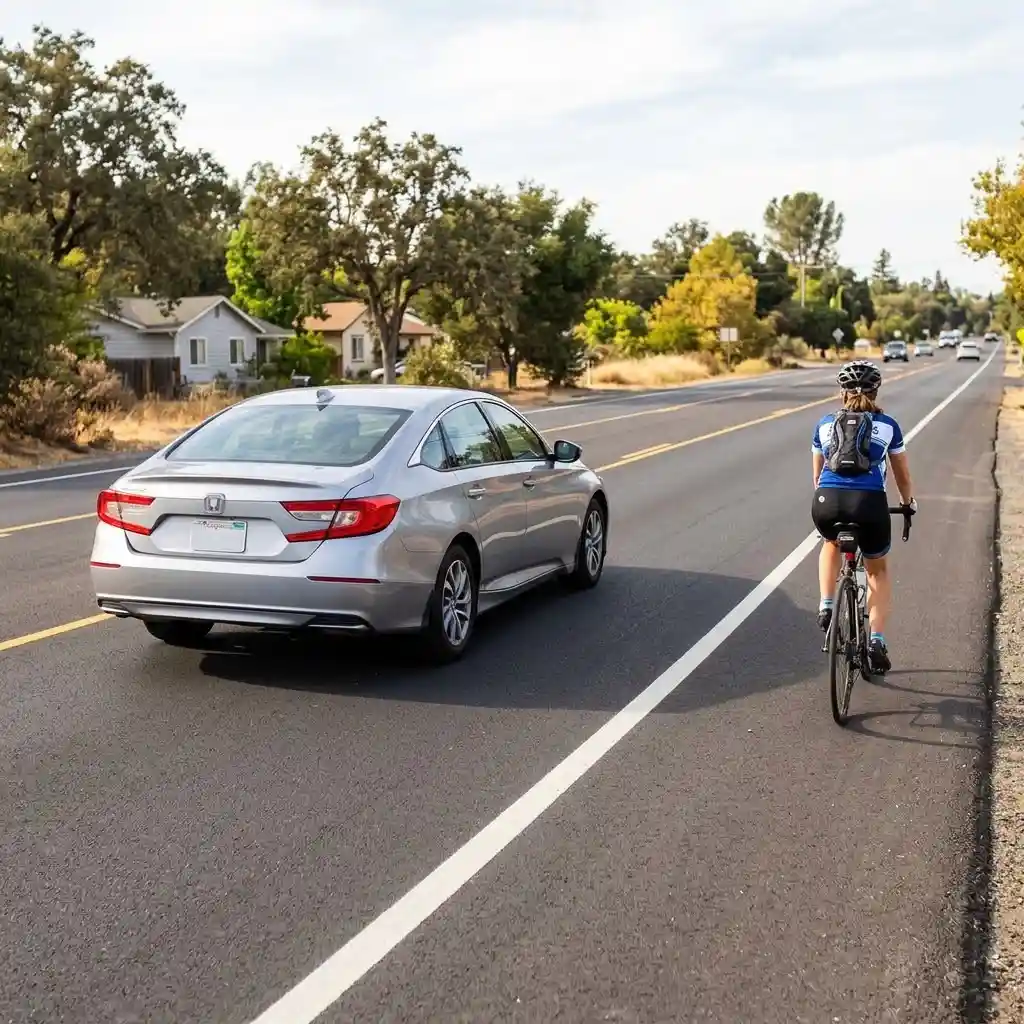
When a motor vehicle is passing a bicyclist, the driver must provide at least three feet of clearance when the circumstances require passing within the same roadway space. If the driver cannot safely provide the required clearance, the driver must wait until passing can be done safely. California’s DMV also advises drivers to avoid passing in a way that could force a cyclist toward parked vehicles or open car doors.
This matters because a cyclist can be seriously injured even when a vehicle does not directly strike the bicycle. A vehicle passing too closely can cause a cyclist to lose balance, move into traffic, or collide with another object.
A driver should also check blind spots and make sure it is safe before entering or crossing a bicycle lane.
When Must a Cyclist Use a Bike Lane to Avoid Bicycle Accidents?
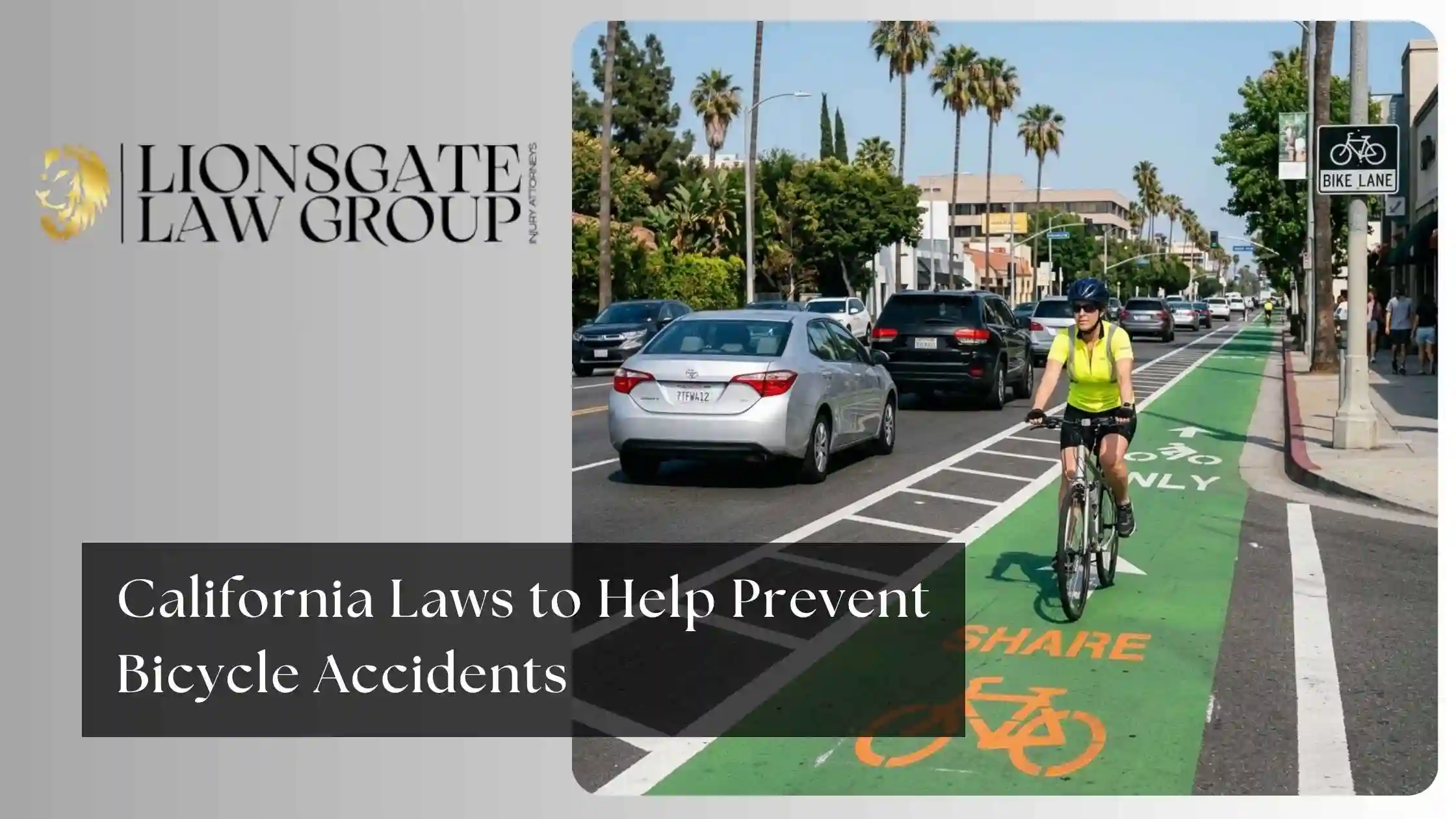
California law addresses the use of established bicycle lanes. When a bicycle lane exists, and a cyclist is traveling slower than normal traffic, the cyclist generally must use the bicycle lane.
However, the law provides important exceptions. A cyclist may leave the bike lane when necessary to pass, prepare for a left turn, avoid debris or another hazardous condition, or approach a location where a right turn is authorized. A cyclist must move with reasonable safety.
This means cyclists should not assume that they are required to remain in a bike lane regardless of what is happening around them.
Road debris, parked vehicles, pedestrians, surface hazards, narrow lanes, and other conditions can affect where a cyclist can safely ride. California law recognizes circumstances in which moving away from the right edge or bike lane may be necessary.
Bicycle Helmets in California, Avoid Bicycle Accidents
California has specific helmet requirements based on age and the type of bicycle being operated.
People under 18 generally must wear a properly fitted and fastened bicycle helmet that meets the applicable safety standards when riding on public roads, bikeways, or other covered public bicycle paths and trails.
Adult cyclists are not generally subject to the same statewide bicycle-helmet requirement that applies to riders under 18. However, wearing a properly fitted helmet remains an important safety precaution for cyclists of all ages.
Certain rules also apply to Class 3 electric bicycles, including helmet requirements and age restrictions. Because electric bicycle laws can differ from traditional bicycle rules, riders should make sure they understand the rules that apply to their particular e-bike.
A Bicycle Must Have Working Brakes
California law requires a bicycle operated on a roadway to have a brake capable of making one braked wheel skid on dry, level, clean pavement.
Working brakes are particularly important when riding in areas with vehicle traffic. A cyclist may need to stop quickly because of a vehicle turning across their path, a pedestrian entering the roadway, a traffic signal, or another unexpected hazard.
A bicycle with defective brakes can make it much harder for a cyclist to respond to an emergency and can result in Bicycle Accidents.
Required Lights and Reflectors at Night to Avoid Bicycle Accidents
California has specific equipment requirements for bicycles operated during darkness.
A bicycle operated at night must have a white front lamp that is visible from 300 feet. It must also have a rear red reflector or an appropriate red light with a built-in reflector that is visible from 500 feet to the rear. Additional reflectors are required on pedals, shoes, ankles, and the sides of the bicycle, subject to the statutory requirements and exceptions.
These requirements are intended to make cyclists easier for drivers to see.
Cyclists can also improve visibility by wearing reflective or bright clothing and avoiding dark clothing when riding at night. However, visibility does not replace a driver’s duty to watch for cyclists and share the road safely.
Stay Out of the Door Zone to Avoid Bicycle Accidents
Dooring accidents are a serious concern for cyclists riding near parked vehicles.
A dooring accident can happen when someone opens a vehicle door directly into the path of an approaching cyclist. The cyclist may have little time to react and can be thrown from the bicycle or forced into moving traffic.
California DMV guidance advises cyclists to ride far enough away from parked cars to reduce the risk of being struck by an opening door.
There is no need to rely on an arbitrary fixed distance from every parked vehicle. The safest position can depend on the road, traffic, parked vehicles, lane width, and surrounding hazards.
Drivers and passengers should also check for approaching cyclists before opening a vehicle door.
Pay Attention to Road and Traffic Conditions
Cyclists should remain alert to conditions that can create a sudden hazard.
These can include:
- Potholes and damaged pavement
- Gravel or broken glass
- Parked vehicles
- Opening car doors
- Pedestrians
- Vehicles turning across bicycle lanes
- Cars entering or leaving driveways
- Debris
- Drainage grates
- Blind spots
- Sudden traffic changes
California DMV guidance specifically advises bicyclists to watch for unsafe road conditions and to adjust their position when necessary.
At the same time, motorists must remain alert for cyclists, particularly when turning, changing lanes, entering a roadway, or crossing a bicycle lane.
What Should You Do After a Bicycle Accident?
Even when a bicycle accident appears minor, injuries may not always be obvious immediately. A cyclist involved in a collision should prioritize safety and medical attention.
After an accident, consider taking these steps:
Get Medical Attention
Seek appropriate medical care after a collision, particularly if you have pain, dizziness, bleeding, or other symptoms.
Medical records can also document injuries that may later become relevant to an insurance or personal injury claim.
Report the Accident When Appropriate
Depending on the circumstances, contact law enforcement and make sure the accident is properly documented.
Document the Scene
If it is safe to do so, take photographs or videos of:
- The bicycle and vehicle
- Road conditions
- Traffic signs and signals
- Bike-lane markings
- Visible injuries
- Property damage
- Nearby vehicles or relevant surroundings
Do not put yourself in danger to obtain photographs.
Gather Information
Collect the driver’s name, contact information, insurance information, and vehicle details when possible. Witness contact information can also be valuable.
Preserve Evidence
Keep photographs, medical records, repair documentation, insurance communications, and other records connected to the accident.
Be Careful When Speaking With Insurance Companies
Insurance companies may ask for information about what happened and the extent of your injuries. Before making statements about liability or accepting a settlement, consider getting legal advice about your particular situation.
How a Bicycle Accident Lawyer Can Help
A bicycle accident can involve more than determining whether a vehicle made contact with a cyclist.
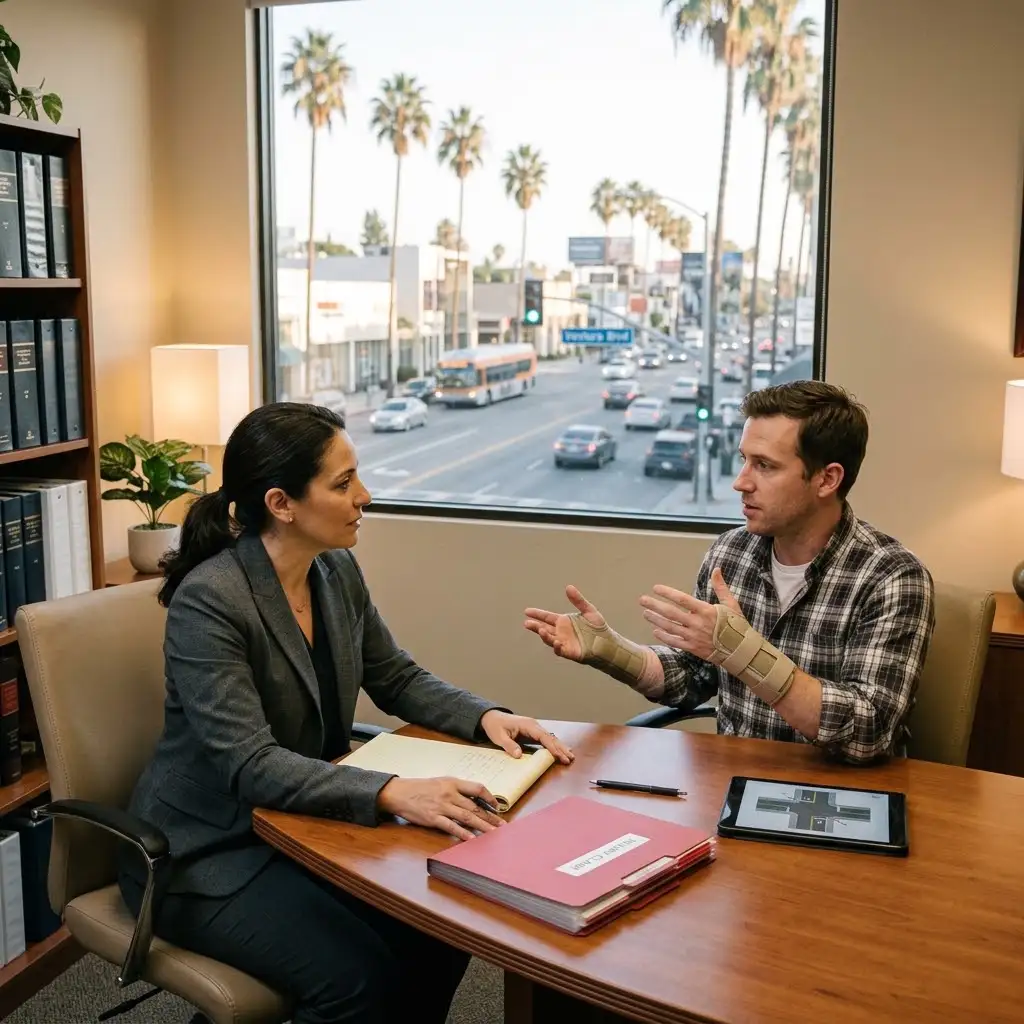
The circumstances may involve a bike lane, an intersection, a parked vehicle, an opening car door, distracted driving, an e-bike, or another roadway issue. Determining responsibility may require reviewing photographs, witness statements, vehicle information, available records, and other evidence.
Lionsgate Law Group APC represents cyclists injured in bicycle accidents throughout Sherman Oaks and the San Fernando Valley. According to the firm’s bicycle accident practice page, its work includes bike-lane and roadway collisions, dooring accidents, distracted-driver bicycle collisions, and accidents involving electric bikes and electric scooters. The firm states that potential responsible parties can vary depending on the circumstances, including a negligent driver, rental company, or product manufacturer.
The firm also states that it works directly with clients from the initial call through resolution of the claim. Its Sherman Oaks office is located at 15303 Ventura Blvd., Suite 1050, Sherman Oaks, CA 91403.
If you were injured in a bicycle accident, getting legal guidance early can help you understand what evidence may matter and what options may be available for your particular claim.
Contact a Bicycle Accident Lawyer in Sherman Oaks
California bicycle laws are designed to help cyclists and motorists share the road safely. Cyclists must follow traffic rules and maintain required safety equipment, while drivers have important responsibilities when passing, turning, changing lanes, and traveling near bicycles.
Unfortunately, following the law cannot prevent every collision.
If you were injured in a bicycle accident in Sherman Oaks or the San Fernando Valley, Lionsgate Law Group APC offers a free case review for bicycle accident claims. The firm can be reached at 818-574-5494.
A bicycle accident claim can depend heavily on the specific facts of the collision. Speaking with a bicycle accident lawyer can help you understand your legal options and determine what steps may be appropriate for your situation.
This article provides general information about California bicycle laws and personal injury claims. It is not legal advice and does not create an attorney-client relationship. Laws and deadlines can vary depending on the circumstances of a case.